
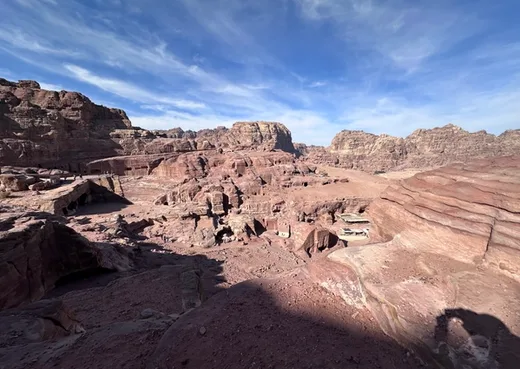
This travelogue is divided into two parts.
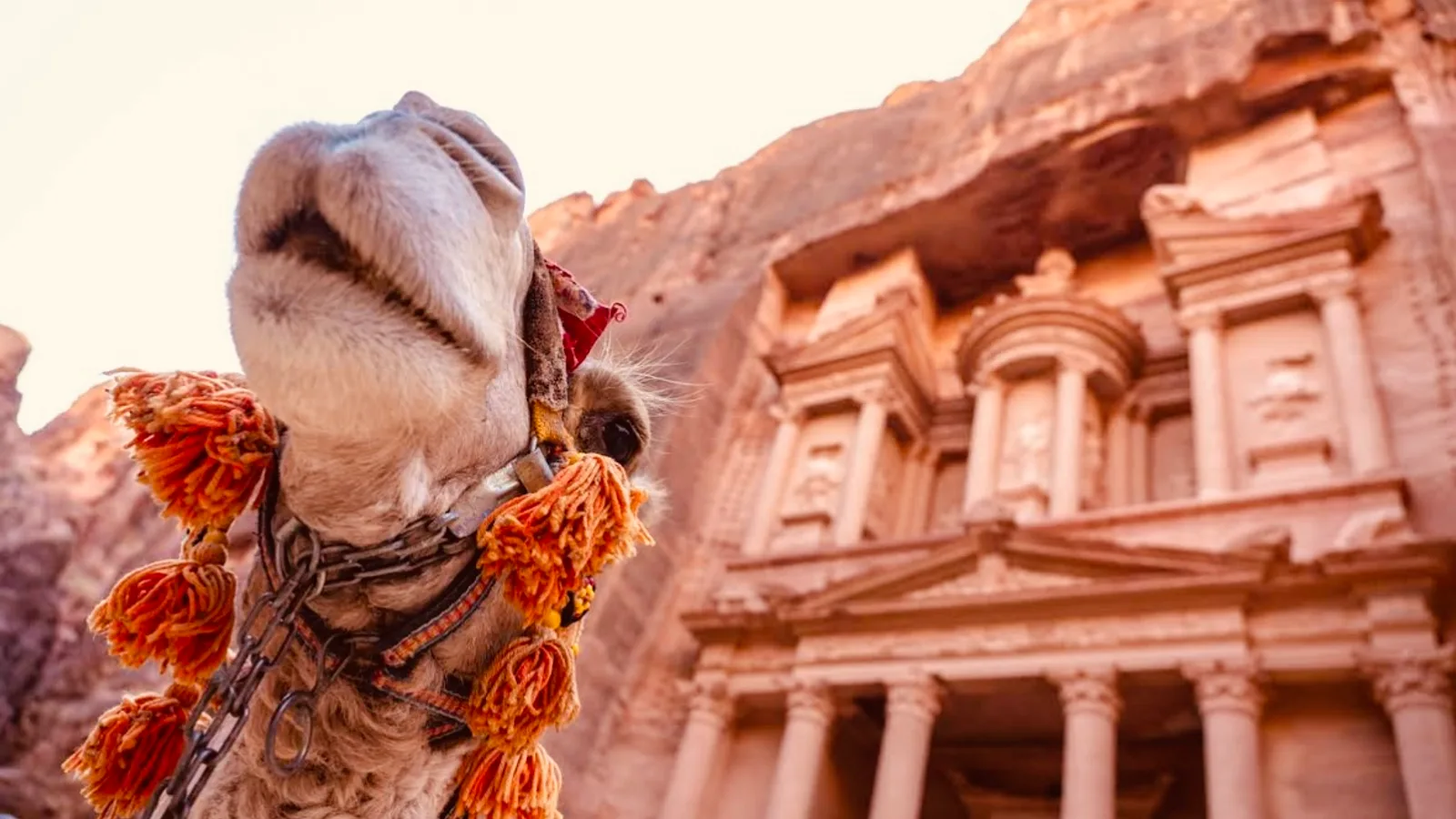
In the first part, we will visit Madaba, Mount Nebo, Jerash, the Dead Sea, Kerak Castle, and the Dana Biosphere Reserve. In the second part, we continue through Little Petra, the main site of Petra, Wadi Rum, and the conclusion of the entire journey.
You can find the sequel here: Jordan Part 2 – Wadi Rum, Petra, and the Most Powerful Experiences of the Trip. https://wanderskaty.com/post/JORDANSKO-2-CAST.
Our journey through Jordan began heading south from Amman towards the city of Madaba, which is famous for its ancient mosaics. Here, houses and churches are adorned with thousands of tiny stones arranged into images that have outlasted entire empires. The most famous is the mosaic map of the Holy Land in the Church of St. George – it feels as if you are peering into an ancient atlas. Madaba, however, offers not only historic sights but also the calm atmosphere of a town where time melts away among narrow streets and the aroma of cardamom coffee. We chose accommodation right in the town center. The Moab Hotel offers a stunning view of the city, and the breakfast was very delicious.
From Madaba, we headed to Mount Nebo, the sacred peak where, according to tradition, Moses took his final look at the Promised Land. Standing there, you gaze out at the exact same panorama – the Jordan Valley, Jericho, and on a clear day, all the way to Jerusalem. The silence, the wind, and the moving history make Mount Nebo one of the most impressive places in the entire country. Entrance fee: 3 JOD.
Our next stop was Jerash, the best-preserved Roman city outside of Italy itself. The columns along the Cardo Maximus stand here as if waiting for the return of the imperial legions. The amphiteraters, temples, and the famous Hadrian's Arch make you feel as though you've stepped into an ancient world that refused to surrender to time. You need to set aside plenty of time for this site. The Jordan Pass is valid here. After a long walk, a good meal really hits the spot. On another note, parking here is free, so the man collecting money from tourists there is definitely a scammer. He tried it on us too, but when I told him I knew parking was free and that I would call the police, he walked away.
From the Roman columns, we headed to the Dead Sea, the lowest point on the planet. The salty water literally kept us afloat, as if defying gravity. The surrounding shores are covered in dark mineral mud, which people gladly slather onto their skin – Jordanians believe it cures everything from eczema to worries. Yet, it is a place filled with a gentle sadness. Year after year, the Dead Sea recedes, dries up, and disappears. You can feel both the beauty and the fragility here at the same time. A nice way to end the visit was a little DIY spa experience in the form of putting on the sea mud. However, the trash – it breaks my heart to see it. Unfortunately, we encounter this everywhere: Asia, the USA, the Balkans, everywhere.
From the coast, we continued to Kerak Castle, a monumental Crusader fortress perched on a rocky ridge. It is a labyrinth of corridors, tunnels, and halls that remembers bloody battles and great sieges. Standing on its ramparts, the wind brings echoes of ancient clashes between Saladin and the Crusaders.
One of Jordan's biggest surprises, however, awaited us in the Dana Biosphere Reserve, where we set out on the Sheq Al-Reesh Trail. The trail leads through a dramatic gorge that winds between pinkish rocks and the deep shadows of the canyon. In some places, it is as narrow as a corridor; in others, it opens up into quiet, vast plains. Dana feels raw and natural – just mountains, stones, the wind, and you. By the end of the route, you truly feel that Jordan is a country best explored on foot, step by step, in the silence of nature.
Bedouin whiskey is an absolute must.
We found accommodation in a remote camp at a very good price. Breakfast, dinner, and tea, tea, tea. In winter, it really hits the spot. Tomorrow our journey continues – Little Petra, the famous Petra, the climb to the Monastery, and a night under the stars in Wadi Rum await us. Jordan is full of surprises.
Frequently Asked Questions
How many days are enough for Jordan?
For a first trip to Jordan, we would recommend at least 7 days. You will manage to visit Amman, Jerash, the Dead Sea, Petra, and Wadi Rum. If you prefer to travel at a more relaxed pace, 8 to 10 days is ideal.
Is Jordan suitable for independent travel (without a tour agency)?
Yes, Jordan can easily be managed without a tour agency. Renting a car makes the most sense because it allows you to comfortably reach Petra, Wadi Rum, and the Dead Sea. You just need to be prepared for a different driving culture and traffic style than in Europe.Is Jordan safe?
Based on our experience, we felt very comfortable and safe in Jordan. In tourist spots like Petra or Wadi Rum, traveling is quite common and well-established. Nevertheless, it is always a good idea to monitor the current situation and respect local customs.
Is it worth visiting Wadi Rum?
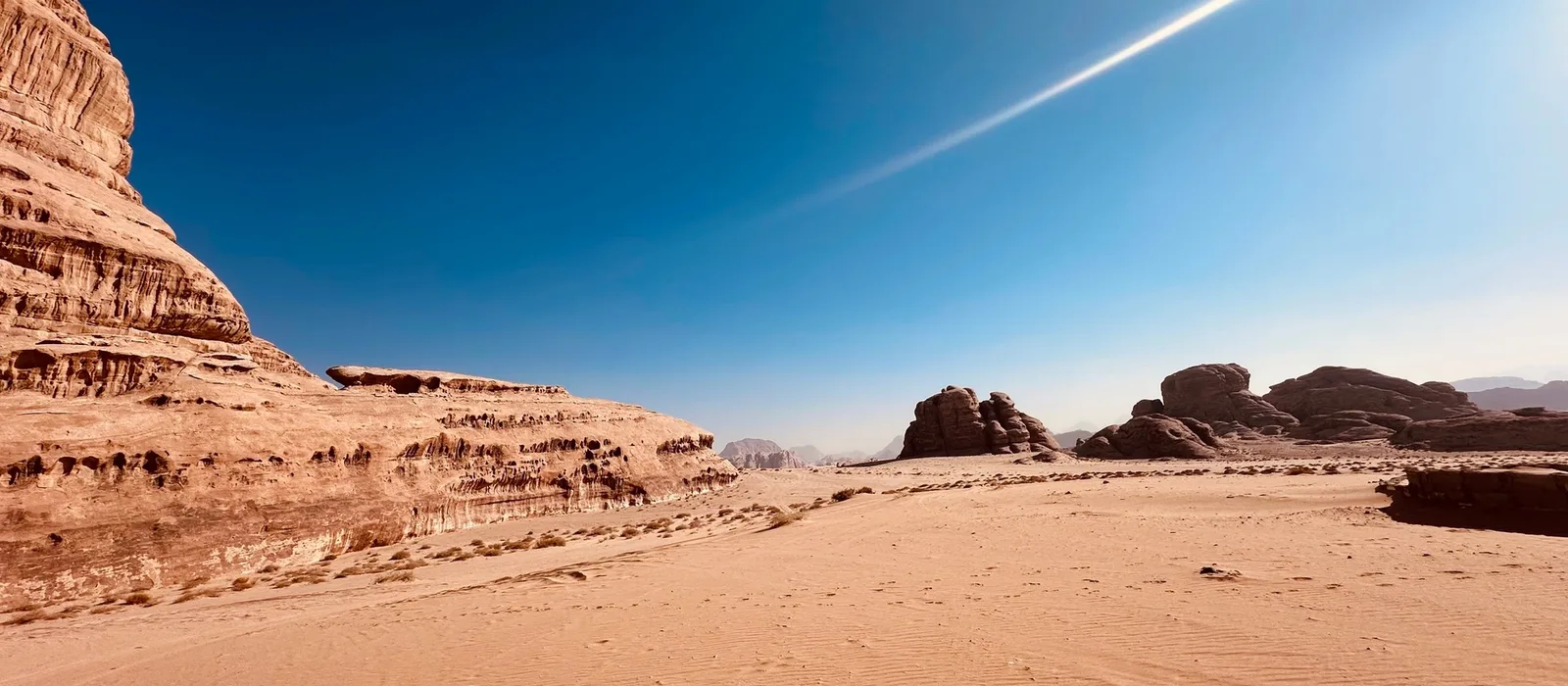
Yes, Wadi Rum was one of the most powerful experiences of the entire trip. The best thing to do is to spend the night directly in the desert, ideally in a camp from where you can take a jeep tour. The desert has a completely different atmosphere compared to traditional tourist sites.
How much does a trip to Jordan cost?
The price depends mainly on flights, accommodation, car rental, and entrance fees. Jordan is not exactly a cheap destination, but it can be explored reasonably if you keep an eye on your accommodation and plan your route in advance. Petra and the Jordan Pass can be a significant expense.
Is the Jordan Pass worth it?
In most cases, yes, especially if you plan to visit Petra. The Jordan Pass often makes sense both financially and practically, as it includes the tourist visa and entry to selected historical sites. However, it is a good idea to check the current conditions before your trip.
What was the greatest experience in Jordan?
For us, it was the combination of Petra and Wadi Rum. Petra is an extraordinary historical site, while Wadi Rum offers the true desert atmosphere, silence, rocks, and a night under the stars. It is the combination of these two places that makes Jordan so powerful.Where to head next?Our journey through Jordan does not end here.
In the second part, we continue to Little Petra, explore the iconic Petra, climb up to the Monastery, experience a night under the stars in Wadi Rum, and include a practical summary of the entire trip.Continue to Jordan Part 2 → https://wanderskaty.com/post/JORDANSKO-2-CAST"
Discussion
Comments
No comments yet. Be the first to share your thoughts.