
This is the second part of our Jordan travelogue.If you haven't read the first part yet, you can find the beginning of our journey there, covering Madaba, Mount Nebo, Jerash, the Dead Sea, Kerak Castle, and the Dana Biosphere Reserve.
You can find the first part of the travelogue here: Jordan Part 1 – Desert, Petra, and the First Taste of the Middle East. For me, Jordan was one of those places you dream about without realizing just how deeply it will eventually touch you. Within just a few days, I experienced more emotions than I ever expected – the silence of the desert, endless stars, the power of history, and a modern Amman full of scents and colors.
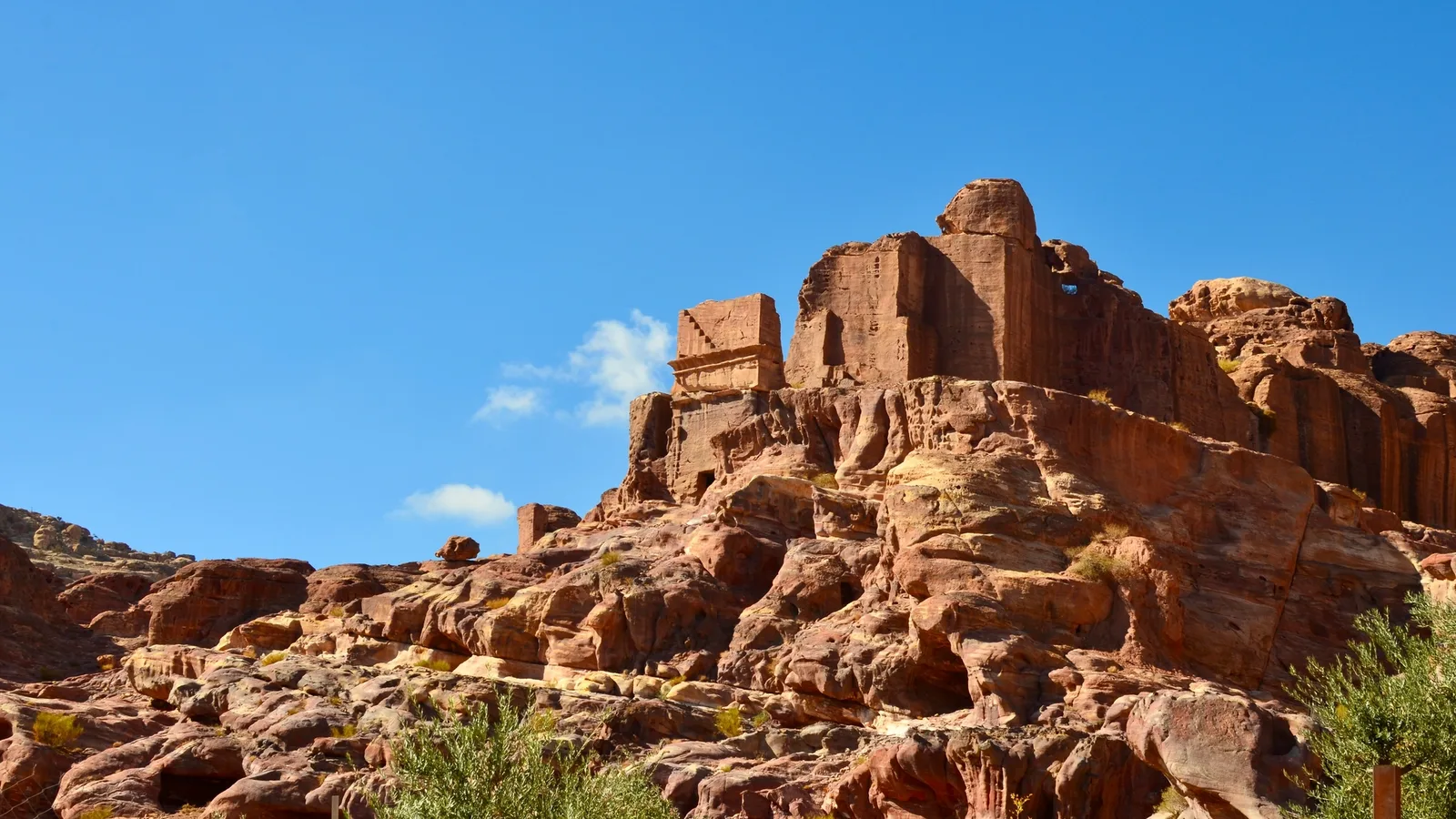
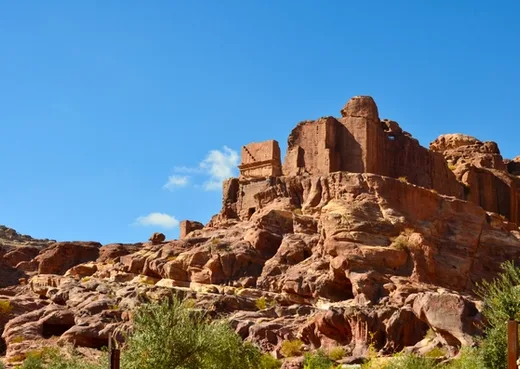
On our first day, we headed out to Little Petra (Siq al-Barid). It is a smaller, yet surprisingly impressive rock-carved area located just a short drive from the main archaeological site of Petra.
Little Petra shares similarities with its "big sister," but it is significantly quieter. There are minimal tourists, narrow rock canyons, and ancient carved living spaces where traders on the Incense Route once spent their nights.
I walked through the rock temples, checked out the viewpoints, and visited the small local tea shops, where a Bedouin brewed me a fragrant cup of tea with fresh mint and sage. It was a place where you could hear nothing but the wind blowing through the rocks and the sound of your own footsteps. Compared to the main Petra site, it felt much more intimate, almost spiritual.
Little Petra serves as a perfect addition—acting as a peaceful bridge between magnificent history and the journey onward into the desert.
I have to admit, my original plan was to explore Petra via the so-called "Back Door" trek, but the journey ultimately took a completely different turn. That's what I get for trying to cheat the system! To make matters worse, even in November, it gets quite hot. After some time of walking, it felt really strange that I was constantly climbing up and up stairs, my thighs on fire, drenched in sweat. Finally, it dawned on me that I had ended up on the trail that led all the way up to the Monastery (Ad Deir)—climbing nearly 800 steps.
The Monastery appeared out of nowhere—massive, silent, and carved into the rock face. That view makes every single drop of sweat worth it. Of course, we didn't miss the other stunning historical sites either. In total, we walked 21 km that day, leaving me physically exhausted but mentally absolutely enchanted.
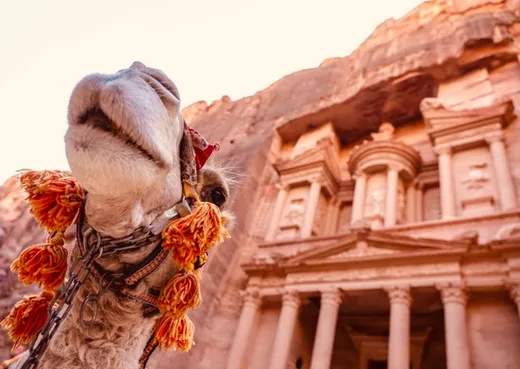
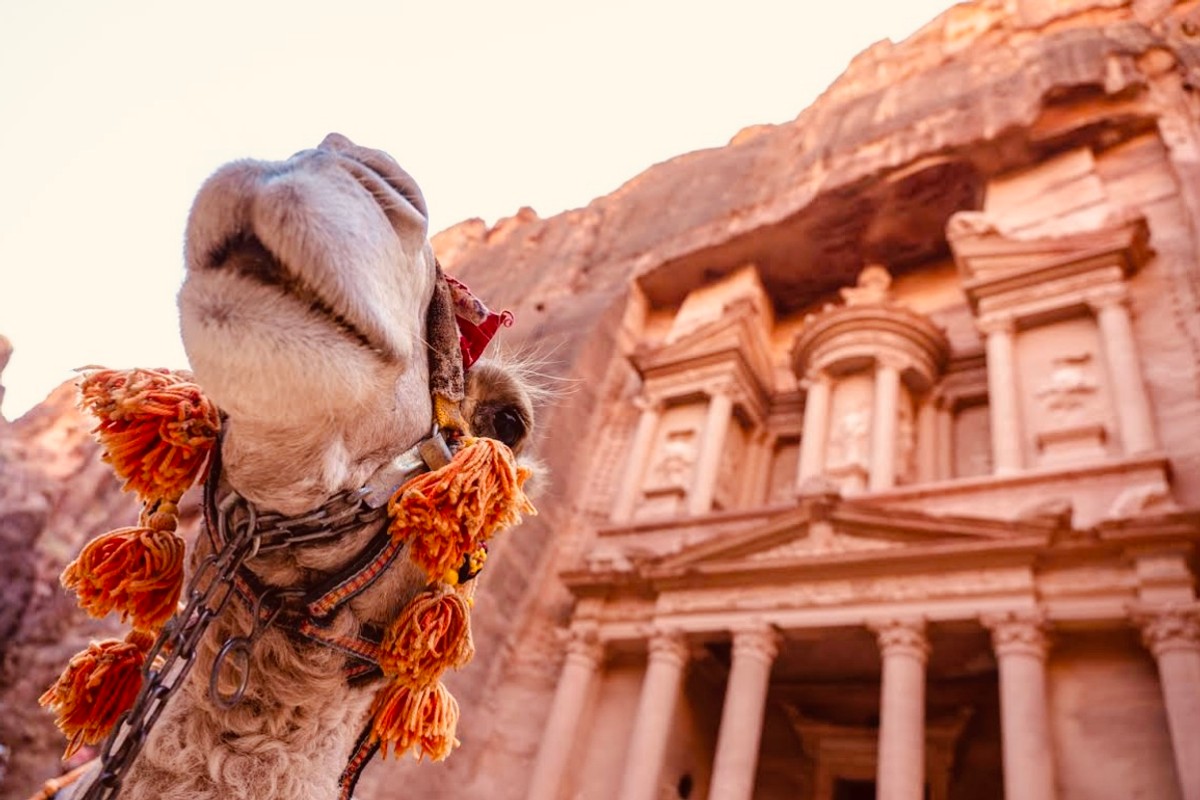
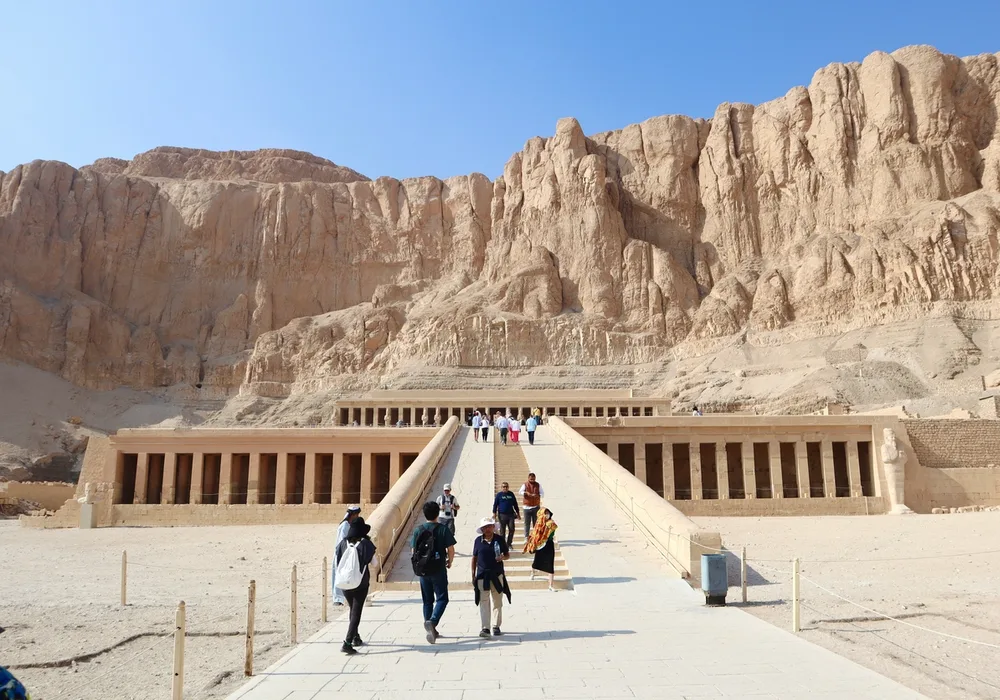
The second day was dedicated to the classic route. The Siq canyon led me directly to the iconic Treasury (Al Khazneh), the most famous façade of the entire Nabataean Kingdom. Even though you know it from movies and photos, standing in front of it in real life is a completely different feeling. You genuinely feel like Indiana Jones. A wonderful surprise happened when a foreign tourist approached me and gifted me her entry ticket to the cliff viewpoint overlooking the Treasury—which costs 10 JOD nowadays. So sweet! :)
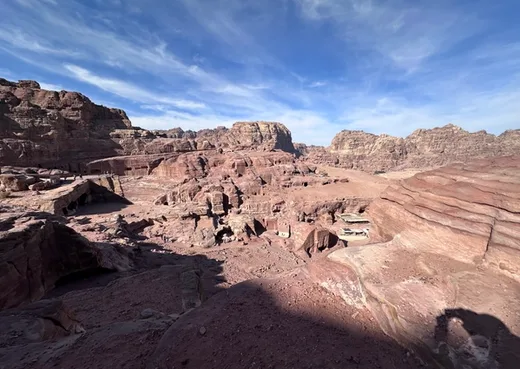
We also explored other monuments—the Royal Tombs, the Street of Façades, the amphitheater, and the High Place of Sacrifice, which offered an extraordinary panoramic view. Every step reminds you just how incredibly advanced the civilization was that carved this city into the rock.
You could sit here for hours just staring at all this beauty.
From a police officer's perspective: In tourism, there is no such thing as a free gift. If anyone runs up to you forcing anything into your hands, put your hands behind your back, say a firm "NO," and keep walking without stopping. The moment you take the item into your hand, the trap has snapped shut.
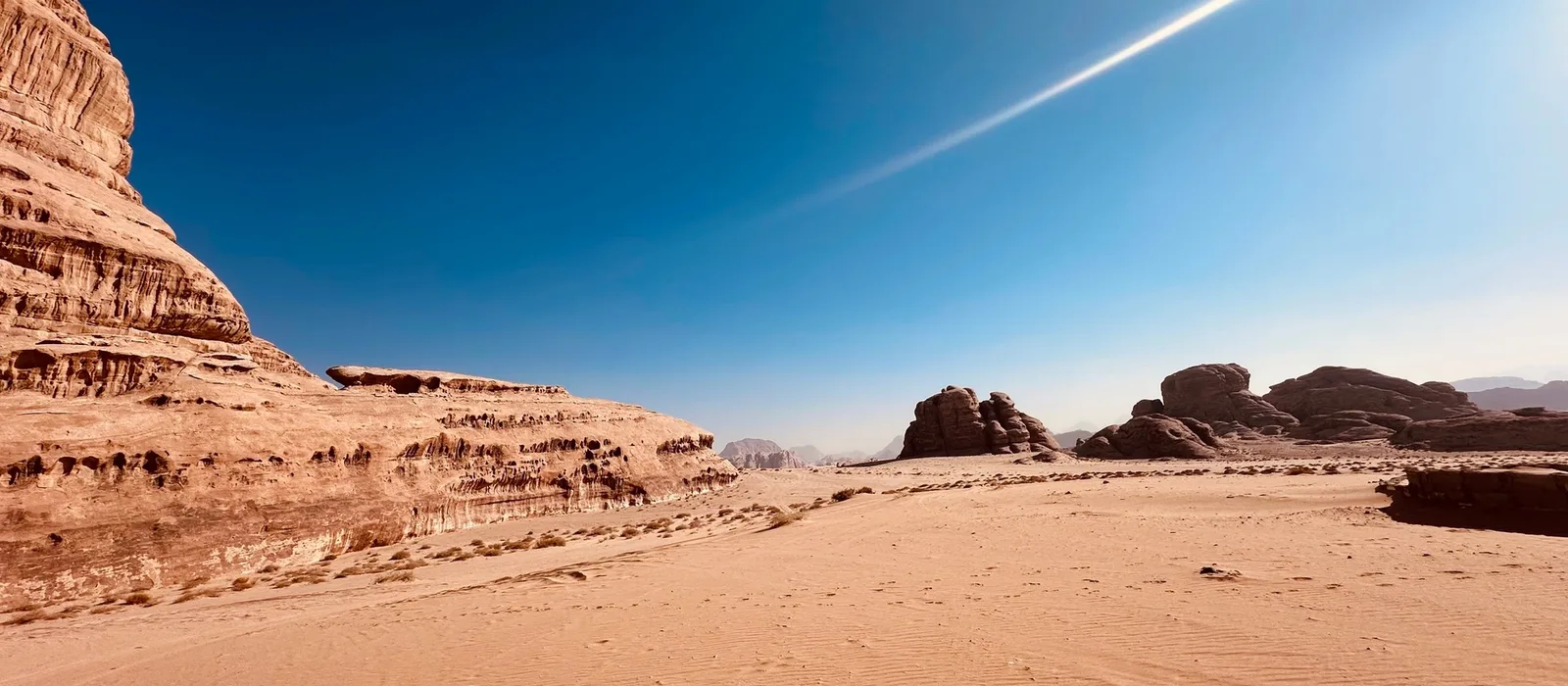
From Petra, we moved by car to Wadi Rum, a red desert that looks like it's from another planet. Literally Mars. We slept in a glamping site surrounded by cliffs, and in the evening, the sky opened up above us, blanketed by millions of stars. We saw the Milky Way so clearly that it was almost hard to believe our own eyes.
We explored part of the desert, rode over the sand dunes, tasted traditional Jordanian dishes, and in the morning, had breakfast with a local Jordanian who prepared a simple but incredibly delicious meal. Wadi Rum is a place we will definitely return to. That absolute silence is completely addictive—especially compared to a rushed and hectic Prague.
Where to Stay?
Madaba – Great accommodation with a fantastic view and breakfast included. 325 CZK (€13) per person. Booking Link
Al Qalah Restorel (Kerak Castle) – Located right by the castle, breakfast included. 600 CZK (€24) per person. Booking Link
Al Nawatef Eco Camp (Dana Biosphere Reserve) – Extremely kind hosts, plus an amazing dinner and breakfast! You sleep in tents with a direct view of the mountains. 230 CZK (€9) per night. Booking Link
Petra Magic – A bit modest, but you get to have breakfast and dinner in a beautiful tent downstairs by the house. 2 nights for 300 CZK (€12). Booking Link
5. Salma Camp (Wadi Rum) – For us, the single greatest travel experience in the world. Sleeping in the Wadi Rum desert, incredible hospitality, and a night under the stars. I will never forget the homemade breakfast! 2,700 CZK (€108) per night for 2 people, including breakfast and dinner. Booking Link
Frequently Asked Questions (FAQ)
Is it worth spending the night in Wadi Rum?
Yes, spending the night in Wadi Rum is absolutely worth it in our opinion. The desert has a completely different atmosphere in the evening and morning compared to the daytime. The real magic lies in the sunset, the absolute silence, the stars, and spending the night right between the massive cliffs.
Is one day enough for Wadi Rum?
One day is enough for a basic taste, but we highly recommend staying at least one night in the desert. If you want to take things slower, enjoy the sunset, and not treat Wadi Rum as just a quick pit stop, plan for at least an afternoon, the night, and a portion of the following day.
How do you get around Wadi Rum?
The most common option is a 4x4 jeep tour with a local guide. You generally shouldn't drive into the protected area on your own in a standard car, as the terrain consists of deep sand, rocks, and unpaved tracks. Arranging a trip through a local Bedouin camp is the easiest way to go.
Is Wadi Rum suitable for beginners?
Yes, as long as you have everything arranged in advance through a camp or a local guide. No special physical fitness is required unless you plan on longer treks or rock climbing. The main thing is to prepare for the desert environment—hot during the day and quite cold at night.
What should I pack for Wadi Rum?
Comfortable clothing, sturdy shoes, a head covering, sunglasses, sunscreen, and something warmer for the evening are definitely essential. The desert can get significantly colder after sunset than you might expect.
Is Wadi Rum expensive?
The price mostly depends on the type of camp, the length of your jeep tour, and whether dinner, breakfast, or transport are included. You can find everything from simple, budget-friendly accommodations to luxury glamping sites. It’s always best to check exactly what is included in the price beforehand.
What was the highlight of Wadi Rum?
For us, it was the raw atmosphere of the desert itself. The rock formations, the silence, the sunset, and sleeping under the stars make Wadi Rum stand out completely from classic historical monuments. It is one of the most powerful experiences you can have in Jordan..

Discussion
Comments
No comments yet. Be the first to share your thoughts.