
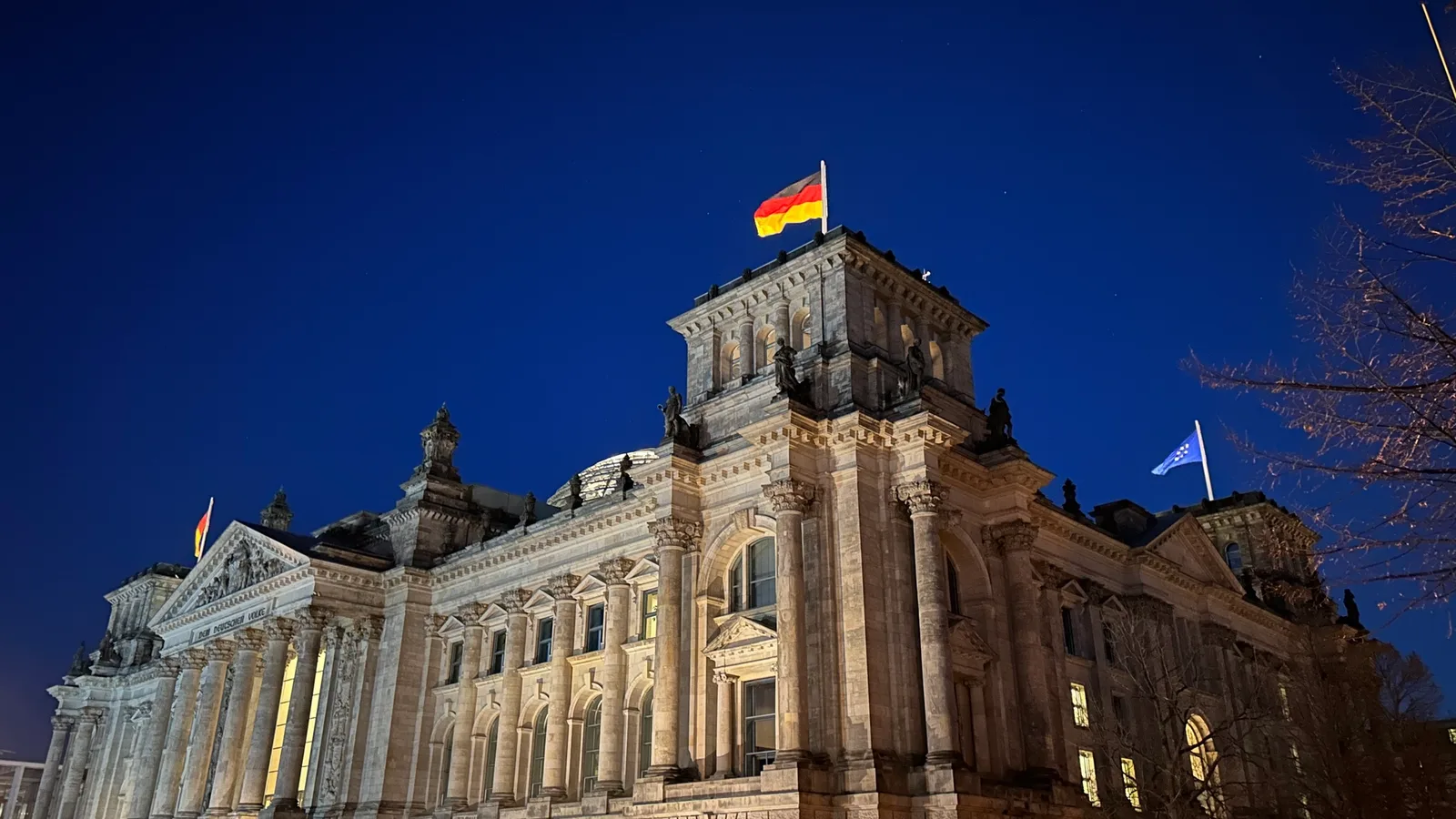
Berlin is exactly the type of city where you don't need to hunt for flights six months in advance or figure out complex logistics. It is literally just around the corner from the Czech Republic, yet it offers so much history, museums, fascinating neighborhoods, cafes, restaurants, and places to discover that you could keep coming back again and again.
We approached Berlin as a multi-day city break, and what surprised us most was how easily the whole trip could be organized. You can get here comfortably by direct train from Prague, there is a massive amount of accommodation options all over the city, and thanks to the perfect public transport, staying a bit further from the center isn't really a major issue. We got lucky and stayed right by the Berlin Wall, so the city’s history literally started just outside our accommodation door.
And it is precisely this history that makes Berlin so interesting, in our opinion. It is not a city that wins you over with a beautiful historic center like Prague, Rome, or Paris. Berlin is different. Raw in some places, modern in others, strangely empty in certain areas, and bursting with life just a few streets away. It is a city where the different layers of European history are visible at almost every step.
How to Get to Berlin from the Czech Republic?
One of Berlin's biggest advantages is how accessible it is.
By Train from PragueIf you are departing from Prague, the train is one of the most comfortable options in our opinion. Direct connections run via Ústí nad Labem and Dresden all the way to Berlin Hauptbahnhof, the main train station located practically in the center of the city. Czech Railways currently state a travel time of around four hours, and direct trains between Prague and Berlin run regularly.
The advantage over driving is clear—you board the train in the Czech Republic, you don't have to deal with driving, parking, or traffic, and you step off right into the Berlin public transport system.
And Berlin isn't just accessible from Prague. Direct or connecting train routes can be used from a whole range of Czech cities. Some international connections continue, for example, via Pardubice and Brno. From other parts of the country, you can easily transfer in Prague, Ústí nad Labem, or another major railway hub.
For us, taking the train to Berlin is perfect even for just an extended weekend.
By Car
Of course, you can also go by car. The benefits are freedom, the option to stop in Dresden along the way, and greater flexibility if you want to combine Berlin with other places in Germany.
However, once you are directly in Berlin, you don't really need a car in our view. Public transport works very well, and in busy parts of the city, a car might just give you a headache when it comes to parking.If you do drive all the way into the center, don't forget about Berlin's low-emission zone. Only vehicles with a green emission badge are allowed into the area inside the S-Bahn ring, and this rule applies to cars registered abroad as well.
Where to Stay in Berlin?
The choice here is truly huge.You can find hotels, apartments, hostels, and smaller guesthouses practically all over the city. Moreover, Berlin is so vast that the concept of a "center" isn't quite the same as it is in Prague.
In our opinion, the most practical choice is to find accommodation somewhere near a U-Bahn or S-Bahn station. If you have a subway station just a few minutes from your hotel, we don't think it makes sense to pay significantly more just to stay right next to the Brandenburg Gate.
We stayed right by the Berlin Wall, which had a completely different atmosphere. You step out of your accommodation in the morning and right in front of you is one of the ultimate symbols of the division of Europe during the Cold War. For us, places like this in Berlin are much more interesting than a luxury hotel in a tourist hub.
If you are choosing an area, we would mainly recommend looking into:
- Mitte – if you want to be close to the most famous sights.
- Friedrichshain – a cool alternative filled with bars, restaurants, and the East Side Gallery.
- Kreuzberg – multicultural Berlin, known for great food and nightlife.
- Prenzlauer Berg – a pleasant and calmer atmosphere with cafes and restaurants.
- Charlottenburg – the western part of the city near Kurfürstendamm and Charlottenburg Palace.
Berlin and Its History
In our view, you can't fully understand Berlin without at least some basic context.The city's roots date back to the Middle Ages, later becoming the center of Prussia and, following the unification of Germany in 1871, the capital of the German Empire. However, it was primarily the 20th century that left the most distinct marks on today's Berlin.The rise of Nazism, World War II, and the subsequent bombings changed the city beyond recognition. After the war, Berlin was divided among the victorious powers, gradually creating West and East Berlin. Then, in 1961, the city was physically split by the Berlin Wall.
Families, friends, and entire neighborhoods suddenly found themselves on opposite sides. The Wall became one of the most powerful symbols of the Cold War and the division of Europe.It wasn’t until November 9, 1889, that a moment came which changed not only Berlin but practically the entire continent—the borders opened and the Berlin Wall began to fall.
Today, unified Berlin is a modern European metropolis, but it doesn't hide its past in any way. On the contrary. And that is exactly what we loved about it.
The Berlin Wall – A Spot You Shouldn't Miss
Naturally, only parts of the original wall remain today, but these are exactly what makes you realize how absurd the division of a single city must have been.
The most famous section is the East Side Gallery, a preserved stretch of the wall over a kilometer long, covered in paintings and graffiti by artists from all over the world. This is also where you'll find the famous painting of the kiss between Leonid Brezhnev and Erich Honecker.
A completely different vibe can be felt at the Berlin Wall Memorial on Bernauer Straße, where the history of the wall is explained in much greater detail. If you are interested in the Cold War era, this is definitely where we would head first.
And then, of course, there is Checkpoint Charlie, the former crossing point between the American and Soviet sectors. Today it is highly touristy, but given its historical significance, it is well worth at least a quick stop.
Getting Around Berlin
There was one thing we appreciated about Berlin above all else—you can practically leave your car parked the entire time.
The public transport network consists of the U-Bahn, S-Bahn, buses, and trams, and the individual parts of the system are seamlessly interconnected. At first glance, the transit map can look a bit intimidating because Berlin is massive and there are a lot of lines. After a few rides, however, you'll find that the system operates quite logically.
For a visitor, the main things to differentiate are:
- U-Bahn – the classic subway.
- S-Bahn – urban and suburban trains, which are incredibly useful for longer commutes.
- Trams – you will encounter these mostly in the eastern part of the city.
- Buses – they will get you even to places where the tracks don't reach.
If you plan on making several trips throughout the day, it is definitely worth looking into a day pass or a tourist card instead of single tickets.
And that brings us to something we used a lot in Berlin.
Berlin WelcomeCard – One of the Most Practical Things for Your Stay
If you want to pack as much as possible into a few days, definitely do the math before your trip to see if the Berlin WelcomeCard is worth it for you.
However, it is necessary to point out one thing: there are several variants, and their terms and conditions can change. The basic Berlin WelcomeCard currently includes unlimited public transport travel in your chosen zones (AB or ABC) and discounts of up to 50% at a variety of sights and attractions.
The ABC variant also covers BER Airport and Potsdam.If your main goal is to visit museums, it is worth comparing it to the Museum Pass Berlin, which offers free admission to over 30 museums over three consecutive days.
We used this kind of card a lot. You don't have to deal with buying a ticket every time you board the subway, and at the same time, it motivates you to check out places you might otherwise skip.
And the museums themselves are, in our opinion, one of the strongest reasons to head to Berlin.
Berlin Museums – Feel Free to Set Aside an Entire Day
If you love history as much as we do, make sure to give Berlin's museums plenty of time.
Really, plenty of it. In college, I studied Middle Eastern affairs and history, so I was looking forward to the museum like a little kid.
Berlin has one of the best concentrations of historical collections in Europe, and Museum Island (Museumsinsel) alone can easily take up a whole day.
Since 1999, the entire Museum Island complex has been listed as a UNESCO World Heritage Site, bringing together several major museums right next to each other.
Pergamonmuseum – Our Most Powerful Museum Memory
This is where we experienced one of the things that stuck in our minds the most from Berlin (the best museum I have ever visited, I even liked it more than the British Museum).
The monumental reconstructions of structures that are thousands of years old feel completely different than a classic glass display case with a few archaeological finds.
One of the absolute highlights was the Ishtar Gate from Babylon and a section of the Babylonian Processional Way.
The blue glazed bricks, the animal reliefs, and the sheer scale of the entire structure are something that simply don't stand out in a photograph the same way they do in person.
You stand in front of a structure originating from the world of ancient Babylon and suddenly realize much better how advanced civilizations existed more than two thousand years ago.
This museum was truly one of our greatest experiences in Berlin.
⚠️ Important Up-to-Date Information
If you are planning a trip to Berlin right now, keep in mind that the Pergamonmuseum is closed due to a massive renovation. Part of the museum (the North Wing containing the Pergamon Altar) is scheduled to reopen on June 4, 2027, while other parts of the reconstruction will continue for significantly longer—until roughly 2037. So, our photos and experiences from the Pergamonmuseum also capture something that a regular visitor cannot see at the moment.
Neues Museum
Another spot we wouldn't skip on Museum Island is the Neues Museum. Its most famous exhibit is the bust of Egyptian Queen Nefertiti, but the entire museum is much more extensive.
If you enjoy Egypt, prehistory, and ancient civilizations, count on spending at least a few hours here.
Altes MuseumThe building of the Altes Museum looks monumental just on its own.
Inside, you will mainly find collections related to ancient Greece and Rome. If you enjoy archaeology, pottery, statues, or the everyday life of the ancient world, it is definitely worth a visit.
Bode-Museum
The Bode-Museum sits on the very tip of Museum Island and, even from the outside, is one of the most photogenic buildings in Berlin.
Inside, you will find extensive collections of sculpture, Byzantine art, and coins.
It might not be as well-known among regular tourists as the Pergamonmuseum, but that is exactly why the atmosphere inside can feel much more pleasant.
And Beyond Museum Island?
Berlin’s museums definitely don't end there.If you are interested in modern history, we highly recommend:
- Topography of Terror (Topographie des Terrors) – a documentation center located on the exact site where the main institutions of the Nazi repressive apparatus were based.
- DDR Museum – a look at life in East Germany, presented in a much more interactive way.
- Jewish Museum Berlin (Jüdisches Museum Berlin) – a place where, in our opinion, you deserve to reserve a few hours rather than just trying to quickly "check it off" your list.
- German Museum of Technology (Deutsches Technikmuseum) – if you enjoy technology, transport, airplanes, and industrial history.
In short, Berlin is a city where you can spend three days just going to museums and still leave with the feeling that you missed half of it.
Brandenburg Gate
Arguably the most famous symbol of Berlin.
The Brandenburger Tor is worth a visit both during the day and in the evening when it is beautifully lit up. From here, you can continue on foot towards the Reichstag.
Reichstag
The German parliament building is fascinating not only for its history but also for its modern glass dome.
If you want to go inside, we highly recommend sorting out your reservation well in advance.
Memorial to the Murdered Jews of Europe
Just a short walk from the Brandenburg Gate, you will find the Holocaust Memorial.
The vast field of concrete slabs affects everyone a bit differently. The deeper you walk between them, the more the surrounding city disappears.
Definitely one of the places we wouldn't skip.
Alexanderplatz and Fernsehturm
The TV Tower (Fernsehturm) can be seen from almost anywhere in central Berlin, making it an excellent landmark for orientation.
Alexanderplatz itself isn't the most beautiful square in the city in our view, but it simply belongs to the Berlin experience.
Berliner Dom
The monumental Berlin Cathedral stands right next to Museum Island.If you are already in this part of town, it is absolutely worth a stop.
Berlin Isn’t Just About History. It Is a City of Food.
There was one thing we truly loved about Berlin—you can eat something completely different every single day.
Of course, German cuisine is everywhere, but Berlin's real strength lies in its multiculturalism.
Alongside traditional German spots, you will find Turkish, Vietnamese, Arabic, Korean, Indian, or even Georgian restaurants.
And thanks to the large communities of people from all over the world, these are rarely just tourist imitations.
What to Taste?
If you are in Berlin for the first time, grab a currywurst at least once.A sausage, curry sauce, and fries might not be haute gastronomie, but it just belongs to Berlin.
The same goes for the döner kebab.
Berlin is one of the cities with a massive Turkish community, so you will find a good kebab on practically every corner.
If you want to combine food with a city walk, we would head straight to Kreuzberg or Neukölln. The concentration of small restaurants, bistros, and eateries from different corners of the world is truly immense here.
On the other hand, in Prenzlauer Berg and Mitte, you will find plenty of modern spots, brunch places, and hipster cafes.
Berlin's Cafe Culture
Speaking of which—Berlin has a very impressive cafe scene.
When traveling, we love that moment when, after a few hours of walking, we simply drop into a cafe, grab a coffee, and just watch the everyday life go by.
And Berlin is perfect for this.You will find small minimalist cafes, classic German pastry shops, and modern specialty coffee spots.
If you love cafes, we would keep your daily itinerary a bit flexible and simply pick one based on the neighborhood you happen to be walking through.
In the end, it is often these unplanned stops that we love most about our travels.
And Finally, Football – Hertha Berlin
We spiced up our stay with one more experience that didn't have much to do with classic sightseeing.
We went to a Hertha BSC football match. And if you like sports even just a little bit, we highly recommend a similar experience.It’s not just about the match itself.
Just the journey to the stadium among the fans, the atmosphere around the complex, and then entering the Olympiastadion Berlin is well worth it. The stadium itself is a piece of Berlin's history. It was built for the 1936 Olympic Games, and its monumental architecture remains very striking to this day.
So suddenly, you combine sports, modern Berlin, and history into a single evening.
And these are exactly the kinds of experiences we love most about traveling—moments when you stop being just a tourist running from one monument to the next for a few hours.
How Many Days Should You Stay in Berlin?
For a first-ever visit, we would recommend at least three full days.In two days, you can of course manage the Brandenburg Gate, the Berlin Wall, Alexanderplatz, and a few other spots, but you will feel like you are just rushing from point A to point B.In our opinion, 3–4 days is ideal.
If you love museums, make it five. Berlin is not a city where the ten main sights are squeezed into two square kilometers. It is massive, and the individual highlights are scattered all over the city.
How Would We Divide a First Visit?
- Day 1: Brandenburg Gate – Reichstag – Holocaust Memorial – Unter den Linden – Alexanderplatz
- Day 2: Museum Island and surroundings – Berlin Cathedral (Berliner Dom) – Kreuzberg in the evening
- Day 3: Berlin Wall – East Side Gallery – Checkpoint Charlie – Topography of Terror
- Day 4: another museum, Charlottenburg, a more relaxed walk through the city, or football
But as we always say—there is no need to follow the itinerary to the minute.
Sometimes the best part of Berlin is simply getting off a stop early and just going for a walk.
Is Berlin Worth It?
For us, absolutely yes. Berlin might not be a city that you fall in love with in the first five minutes.
It doesn't have the beauty of Paris, the perfectly preserved center of Prague, or the atmosphere of Rome.
But it has something else entirely.
Character. Its history is sometimes dark, sometimes fascinating, and often incredibly close. The Berlin Wall fell only a few decades ago, and many of the places we learned about in school are suddenly not just photos in a textbook.
You can stand by the remains of the Berlin Wall in the morning, admire thousands-of-years-old artifacts in the afternoon, grab a Turkish kebab, sit in a small cafe, and end the evening among tens of thousands of people at a football stadium.
And it was this exact combination that we enjoyed most about Berlin.
Plus, it is easily accessible from the Czech Republic by train, so you don't need a flight ticket or a week off.
All it takes is a few days, a backpack, and you're good to go.
And we have a feeling that even after your first visit to Berlin, you won't see everything by a long shot.

Discussion
Comments
No comments yet. Be the first to share your thoughts.