
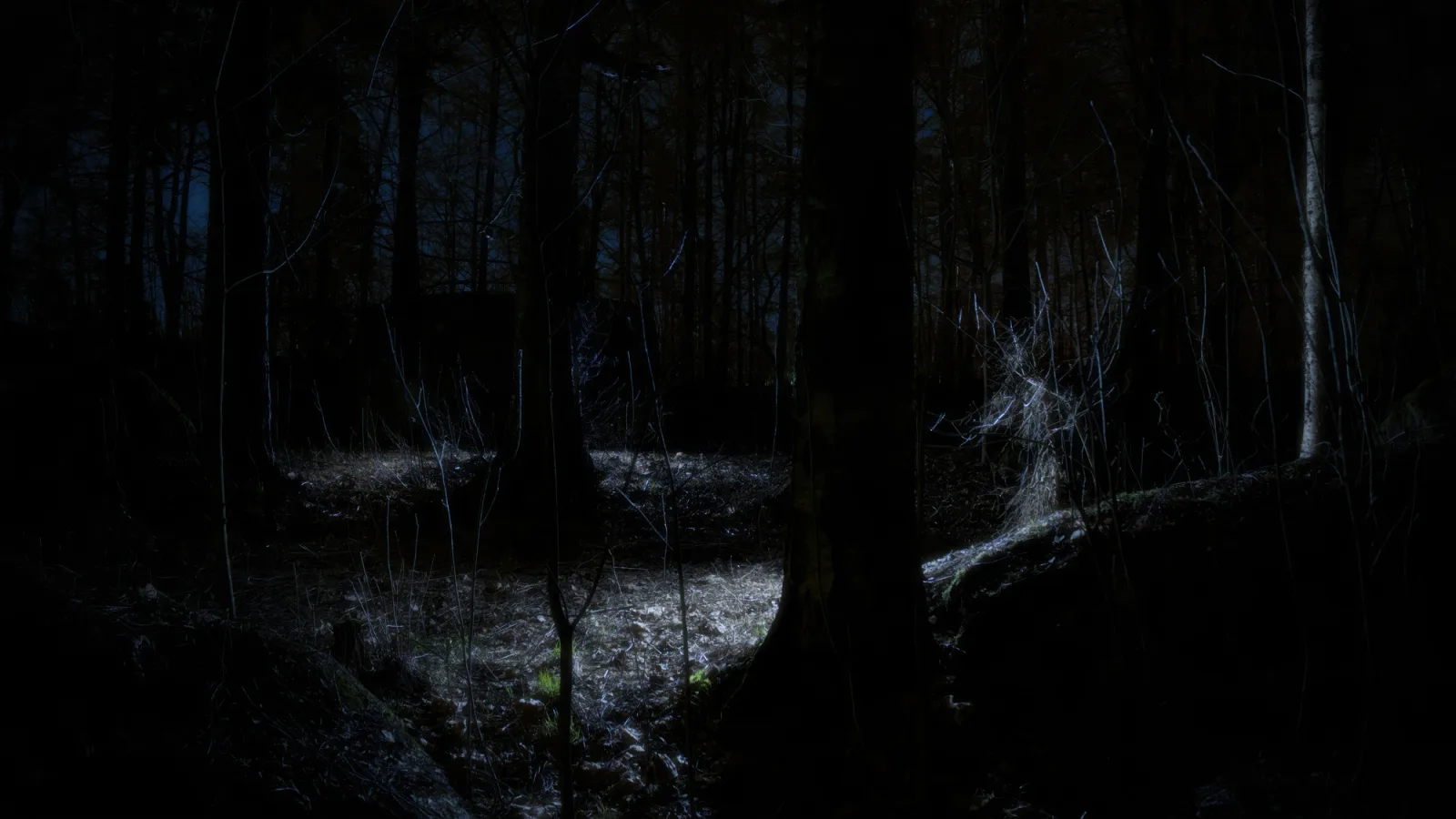
Visiting these locations falls under the term dark tourism.
For us, however, this isn't about sensationalism or snapping "creepy photos" for social media. We value dark tourism primarily because it allows us to learn about history directly in the places where it actually unfolded. Some of these sites are highly famous, while others remain somewhat off the beaten tourist path.
We have selected 10 places in Czechia that we believe are among the most fascinating destinations for anyone interested in dark history, World War II, communist oppression, industrial heritage, or rather unconventional traveling.
But right at the start, an important note: real people died in many of the places mentioned in this article.
Dark tourism is not an amusement park.
Especially when visiting memorials dedicated to the victims of war and oppression, we should approach them with deep respect for the people whose stories they commemorate.
1. Terezín – One of the Most Powerful Dark History Sites in Czechia
📍 Ústí nad Labem Region
If we had to pick the single place that comes to mind first for most people when they hear "dark tourism in Czechia," it would likely be Terezín. During World War II, two distinct systems of oppression operated here. Starting in 1940, the Small Fortress (Malá pevnost) served as a Prague Gestapo police prison. Then, in 1941, the main fortress town itself was converted into a Jewish ghetto, which functioned as a collection and transit camp before further deportations to death camps.
The combination of well-preserved spaces, the entire layout of the fortress town, and the heavy knowledge of what transpired here makes Terezín an exceptionally powerful place. You can visit the Small Fortress and the Ghetto Museum, among other sections. I definitely wouldn't count on a quick one-hour pit stop here; if you are truly interested in history, set aside a substantial part of your day for Terezín.
Why visit:
- World War II history
- Nazi oppression and atrocities
- Authentically preserved spaces
- Extensive museum exhibitions
- One of the most significant dark tourism sites in Czechia
2. Jáchymov – Uranium, Labor Camps, and Communist Oppression
📍 Ore Mountains (Krušné hory)Jáchymov is exactly the kind of destination that interests us most in dark tourism. At first glance, it’s a beautiful mountain town in the Ore Mountains. But once you begin uncovering its history, you stumble upon one of the darkest chapters of communist Czechoslovakia.
Following World War II, a complex system of forced labor camps connected to uranium mining was established around Jáchymov. Political prisoners of the communist regime, among others, were held here under inhumane conditions.
One of the most striking symbols of this era is the Red Tower of Death (Rudá věž smrti) near Ostrov. It was part of the Vykmanov II labor camp, established in 1951. According to the National Heritage Institute, approximately 300 political prisoners—deemed especially dangerous by the regime—were interned here to sort and process raw uranium ore without any protective gear. Today, the Jáchymov mining landscape, including the Red Tower of Death, is part of the Erzgebirge/Krušnohoří Mining Region, a UNESCO World Heritage site.
Another essential stop is Mine Shaft No. 1 (Štola č. 1). Dug out in 1952 for uranium extraction, it now serves as a preserved mining site showcasing the methods used during that dark period. If you want to truly understand Jáchymov, we recommend looking beyond the town boundaries. The entire surrounding landscape is scarred with remnants of mining, uranium, and forced labor camps.
Why visit:
- Political trials of the 1950s
- Communist forced labor camps
- Uranium mining history
- The Red Tower of Death and Mine Shaft No. 1
- A fascinating combination of raw history and mountains in Czechia
3. Vojna Memorial near Příbram – A Preserved Communist Forced Labor Camp
📍 Lešetice near Příbram
If the history of Jáchymov captures your interest, the Vojna Memorial should be your very next stop. The grounds of this former forced labor camp are among the best-preserved sites of their kind in our country.Behind barbed wire, people were held in forced labor to mine uranium. Among the political prisoners were scientists, artists, clergymen, politicians, and athletes—including Czechoslovak national ice hockey players and world champions from 1947 and 1949.
The preserved buildings, guard towers, and the entirety of the enclosed compound give this location a completely different dimension compared to a traditional museum. You aren't just looking at photographs of a labor camp; you are standing directly inside it. The memorial is now part of the Mining Museum Příbram and is open to the public.
Why visit:
- Communist totalitarian oppression
- Stories of political prisoners
- Uranium mining heritage
- An authentically preserved camp layout
- An excellent companion trip to Jáchymov
4. Lidice – The Place Where a Razed Village Left Behind an Empty Space
📍 Central Bohemian Region
Dark tourism doesn’t always have to involve underground tunnels, prisons, or decaying factories. Sometimes, the most powerful thing is what is missing from the site. Lidice is the perfect example of this.
On June 10, 1942, the village of Lidice was entirely razed to the ground by Nazis as part of the mass reprisals following the assassination of Reinhard Heydrich. Today, the reverent memorial area commemorates the village and its residents who fell victim to Nazi violence.
In the open landscape, you can still trace the contours where the church, the school, or individual homesteads once stood. The complex also features a museum, the mass grave of the Lidice men, and the famous, heartbreaking bronze sculpture dedicated to the child victims of war. The sheer emptiness of the former village resonates perhaps more deeply than any physical reconstruction could.
Why visit:
- World War II and the Heydrichiad era
- The authentic site of a completely destroyed village
- A museum and deeply moving reverent grounds
- One of the most profound sites in modern Czech history
5. Ležáky – The Tragedy of a Small Hamlet Connected to the Silver A Drop
📍 Pardubice Region
Almost everyone knows about Lidice, while Ležáky often remains somewhat in its shadow. Yet, it is an extraordinarily powerful place. This small stone-cutting hamlet was deeply intertwined with the anti-Nazi resistance, providing a safe haven for paratroopers from the Silver A group, who operated their radio station, code-named Libuše, from here. On June 24, 1942, Nazi forces surrounded Ležáky and subsequently razed the settlement. All of its adult residents were executed on the spot, and the remaining children, with the exception of two, were sent to death camps.
Today, stone memorials stand in the place of the individual houses, marking where each structure originally stood. Much like in Lidice, it is the sheer emptiness of the landscape and the heavy awareness of what still existed here in 1942 that resonates the most.
Why visit:
- The history of Operation Silver A
- The Heydrichiad reprisals
- The site of a completely vanished settlement
- A deeply moving, somber atmosphere
- A significantly less commercialized and less-crowded alternative to Lidice
6. National Memorial to the Heroes of the Heydrich Terror – The Crypt on Resslova Street
📍 PragueYou can find one of the most poignant dark tourism sites in Prague just a few minutes' walk from Charles Square (Karlovo náměstí). Underneath the Orthodox Church of Sts. Cyril and Methodius lies the crypt where the Czechoslovak paratroopers hid after the successful assassination of Reinhard Heydrich.
On June 18, 1942, they fought their final, heroic stand here against overwhelming Nazi forces. Today, the crypt houses a reverent exhibition dedicated to the seven Czechoslovak soldiers.
The raw authenticity is what makes this location so gripping. This isn't a museum built decades after the fact; you are standing in the exact space where the battle took place. The bullet-scarred outer wall of the church still bears witness to the fierce assault on the hidden paratroopers.
Why visit:
- The legacy of Operation Anthropoid
- The history of the Czechoslovak resistance
- An authentic, historic crypt
- One of the most significant World War II landmarks in Prague
7. Kobylisy Shooting Range – A Nazi Execution Ground Enclosed in Modern Prague
📍 Prague 8
Another deeply moving site can be found in the neighborhood of Kobylisy. Originally a military shooting range, the site was repurposed by the German occupation forces for retaliatory executions. In the northern section of the compound, the Nazi administration established a mass execution site.The highest number of executions took place here during the Heydrichiad martial law. According to historical records from Prague 8, the Nazis executed 540 people at the Kobylisy Shooting Range.
Today, the site is recognized as a National Cultural Monument and serves primarily as a reverent memorial space. It is a prime example of a place where you can live in Prague for years without ever realizing that such a dark history lies just a few subway stops away from the city center.
Why visit:
- The tragic history of the Heydrichiad era
- An authentic Nazi execution ground
- Tributes to the Czech resistance movement
- A lesser-known dark tourism site directly within Prague
8. Lety near Písku – Memorial to the Holocaust of the Roma and Sinti
📍 South Bohemian Region
This is a location that we believe absolutely belongs on a list like this. Between 1942 and 1943, a Protectorate camp operated on this authentic site in Lety, where Czech Roma and Sinti were forcibly interned before being deported to the Auschwitz II-Birkenau death camp.
Today, the site is home to the Lety Memorial to the Holocaust of the Roma and Sinti in Bohemia, featuring both indoor and outdoor exhibitions. The modern history of the site itself is also highly compelling. For a long time, the memorial and the history of the camp were a problematic part of Czech historical memory; for decades, a massive industrial pig farm stood directly on the grounds of the former camp. Today, the site has finally been transformed into a dignified and respectful memorial.
Why visit:
- Learning about the Holocaust of the Roma and Sinti
- A look into a lesser-known chapter of Czech history
- Standing on the authentic site of the former camp
- A modern, conceptual, and educational exhibition layout
9. St. James Ossuary in Brno – Thousands of Human Remains Beneath the City Streets
📍 Brno
Now, let's shift away from modern history to a completely different branch of dark tourism. Beneath the Church of St. James in the center of Brno lies a vast ossuary that was only rediscovered in 2001 and is now open to the public.The underground chambers are packed with thousands of human bones and skulls. However, the atmosphere here is entirely different from Terezín or Jáchymov. This isn't a site connected to a single historical tragedy; rather, it is a striking reminder of how our ancestors handled death, burials, and the sheer lack of space in historical city cemeteries.Morbid to some, but to us, it is a fascinating historical site.
Why visit:
- Exploring historic underground chambers
- Visiting a unique, massive ossuary
- Learning about the history of historical burial practices
- A look at an unconventional side of Brno
- Experiencing a completely different type of dark tourism
10. Sedlec Ossuary – The Most Famous Bone Church in Czechia
📍 Kutná Hora
When it comes to "classic" dark tourism, the Sedlec Ossuary is undoubtedly one of the most famous destinations in our country. Located on the grounds of a former Cistercian monastery, the All Saints Church with its ossuary dates back to the first half of the 14th century.
Today, the ossuary is world-famous for its extraordinary arrangement of human remains. The skulls and bones are not merely stored here; they have been meticulously arranged to form the decoration of the space, including a massive chandelier and coats of arms. This makes Sedlec visually one of the most striking dark tourism sites in all of Europe.
The ossuary is open to the public, and the operator currently utilizes timed-entry tickets. However, the same rule applies here as with all ossuaries: this is not a horror attraction, but a reverent space holding human remains.
Why visit:
- Exceptional arrangements of human remains
- Fascinating sacred architecture
- Extraordinarily unique and artistic interior decorations
- One of the most famous sites of its kind in Europe
BONUS: THE BOHNICE CEMETERY
As summer draws to a close, what many consider the best season of the year begins. The leaves turn vibrant colors, temperatures drop to comfortable levels, people flock to cafes for their favorite warm drinks, and for lovers of all things dark, the season for cemetery walks begins. Sounds weird, right? But around All Souls' Day, every cemetery takes on a magical atmosphere—candles flicker, trees cast long shadows, and it feels truly special. I still remember the first time I visited the so-called "Cemetery of the Insane" during this time of year.💀
Essential Facts About the Site
- Origin and Capacity: It was consecrated in 1909 as a burial ground for the former Royal Regional Asylum for the Insane in Bohnice. Burials ceased here in 1951, and the site has been completely abandoned since 1963.
- Bodies in Three Layers: Over 4,200 to 4,700 people lie buried across an area of roughly 2.5 hectares. Because the cemetery quickly ran out of space, coffins were placed into the ground in up to three layers on top of each other.
- Graves Without Names: The vast majority of the graves have no tombstones. They are merely elongated mounds of earth completely overgrown with thick ivy. The system dictated that after a burial, only a wooden stake bearing the patient's ID number was driven into the ground. Those stakes rotted away a long time ago.
🧠 Who Lies Here? (A Mix of the Unfortunate and the Notorious)
This place did not belong solely to people with mental illnesses. It became the final resting place for those whom society at the time could not or would not bury in standard Christian cemeteries:
- World War I Soldiers: Hundreds of soldiers lie here who lost their minds in the asylum due to the horrors of the trenches (the so-called shell shock) or who succumbed to a typhus epidemic.
- Suicide Victims and Killers: People who committed suicide directly within the asylum, as well as hardened criminals and violent offenders who were institutionalized after being declared legally insane.
- The Italian Fascist Connection: A monument dedicated to the victims of World War I stands in the center of the cemetery. The marble plaques that used to hang from it were personally funded in the 1930s by the Italian dictator Benito Mussolini to honor the Italian soldiers buried there.
👁️ The Wildest Curiosities and Legends
- The Connection to Otýlie Vranská: Legend has it that Sergeant Pavlíček is buried here—one of the prime suspects in the brutal, to this day unsolved 1933 murder of prostitute Otýlie Vranská. Pavlíček hanged himself shortly after her body parts were discovered and ended up right here.
- The Assassin Gavrilo Princip: One of the wildest urban legends claims that Gavrilo Princip—the man who assassinated Archduke Franz Ferdinand and sparked World War I—was secretly buried here. He died in the Terezín fortress, and the Austrian authorities supposedly feared his grave would become a shrine for radicals. Officially, however, he was buried elsewhere; the Bohnice connection is merely a myth that nevertheless adds to the cemetery's dark atmosphere.
- Satanic Rituals: In the 1980s and 1990s, the abandoned cemetery fell into complete ruin and became a hub for alternative subcultures. Satanic rituals were reportedly held here, and the site became a hangout for the homeless, drug addicts, and vandals who heavily damaged the old cemetery chapel.
🎬 A Hollywood Moment
The bleak, haunting atmosphere of the Bohnice cemetery also caught the eye of director Miloš Forman. He filmed the funeral scenes for his Oscar-winning masterpiece Amadeus here (the cemetery doubled as the Viennese pauper's graveyard where the body of W.A. Mozart was cast into a mass grave).
📌 Practical Info
For many years, the cemetery was freely accessible through a rusted, broken gate. Currently, its main landmark—the Art Nouveau chapel and morgue—is undergoing reconstruction. However, the cemetery remains accessible to the public; visitors can walk along designated trails, and organized guided tours are occasionally held here as well.
What about urbex?
Dark tourism and urbex (urban exploration) often overlap, but in our opinion, they aren’t exactly the same thing.Urbex is mainly about exploring abandoned buildings. Dark tourism, on the other hand, is primarily tied to the somber history of a place—death, war, persecution, disasters, or human suffering.Of course, some locations fit both categories. In the Ore Mountains (Krušné hory), for instance, you can find a number of abandoned industrial and mining sites that also carry a very dark past.
We would include areas like Rolava here, which we have dedicated a standalone article to on WandersKaty.However, locations like these have one major downside:
- Not all of them are officially accessible or safe.
Because of this, we never enter closed properties just to snap a better picture. If a compound is private or sealed off, we respect that.
Dark tourism is not about who finds the "creepiest spot"
To wrap things up, there is one thing we want to emphasize above all else.We love dark tourism. We are fascinated by abandoned sites, mines, prisons, underground tunnels, and the darker chapters of history. But in our eyes, the point is never to rank them based on: "This place was the most terrifying."Behind every single one of these locations is a real story.
- People were imprisoned in Terezín.
- Entire communities vanished in Lidice and Ležáky.
- People were forced into hard labor in the uranium mines of Jáchymov and Vojna.
- Czech Roma and Sinti were interned in Lety before their deportations.
- And the Czechoslovak paratroopers died in the crypt on Resslova Street.
That is why dark tourism captivates us mainly as a way to learn about history outside of a textbook. Standing directly at the scene of an event is a completely different experience than reading two pages about it at home. And here in Czechia, we have a surprisingly large number of such places.
If you are just as interested in these locations as we are, we are gradually adding more articles dedicated to dark tourism, urbex, and forgotten places in Czechia and abroad to WandersKaty.
Discussion
Comments
No comments yet. Be the first to share your thoughts.