


Some places are beautiful. And then there are places that attract you precisely because they aren’t beautiful at all.
Rolava belongs firmly to the second category.
In the middle of the Ore Mountain forests, not far from Přebuz, stands the enormous concrete skeleton of a former mining and processing complex. No windows, no roofs, no people. Just concrete, rusting remnants of old structures and nature slowly reclaiming the entire site.
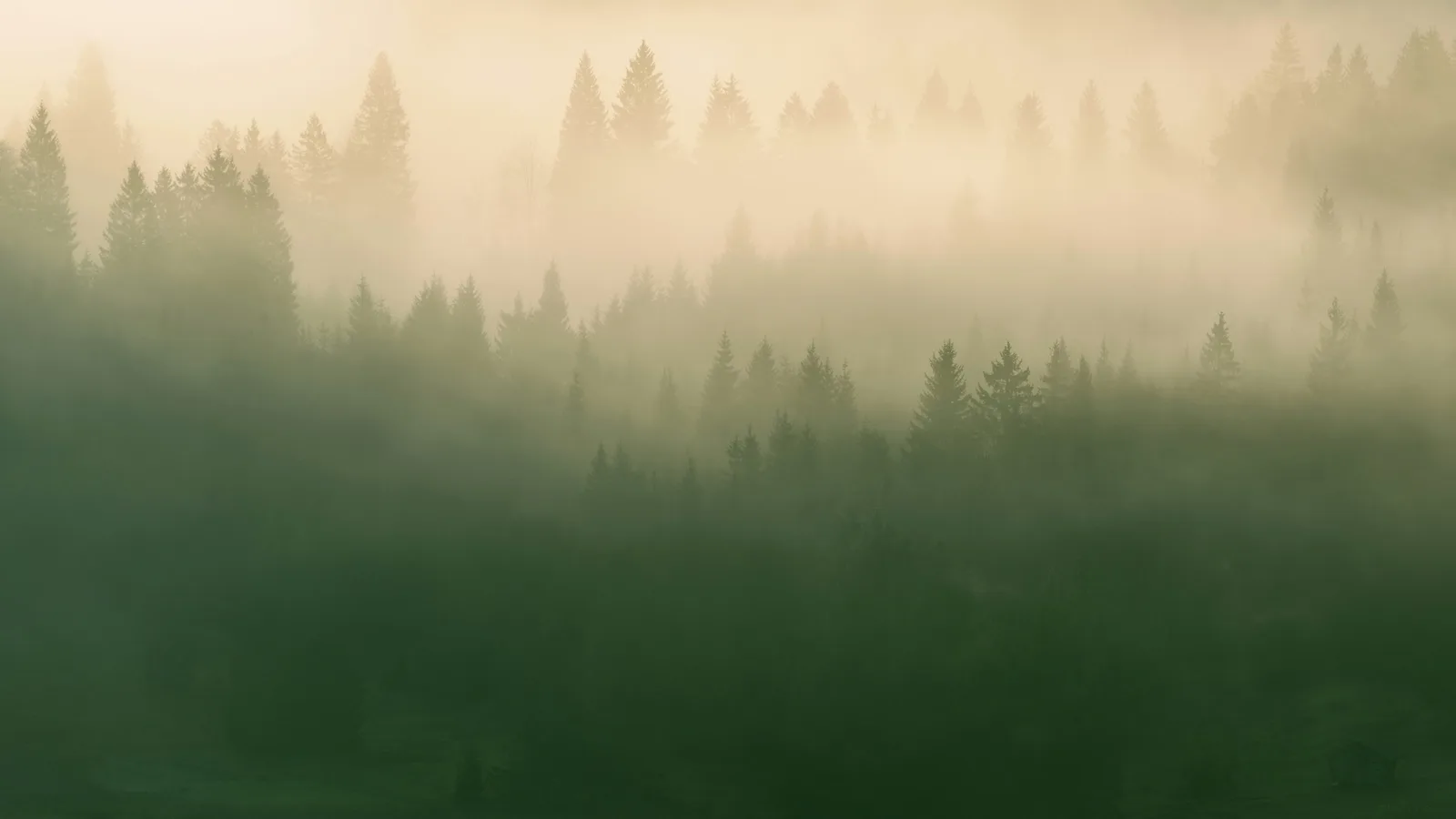
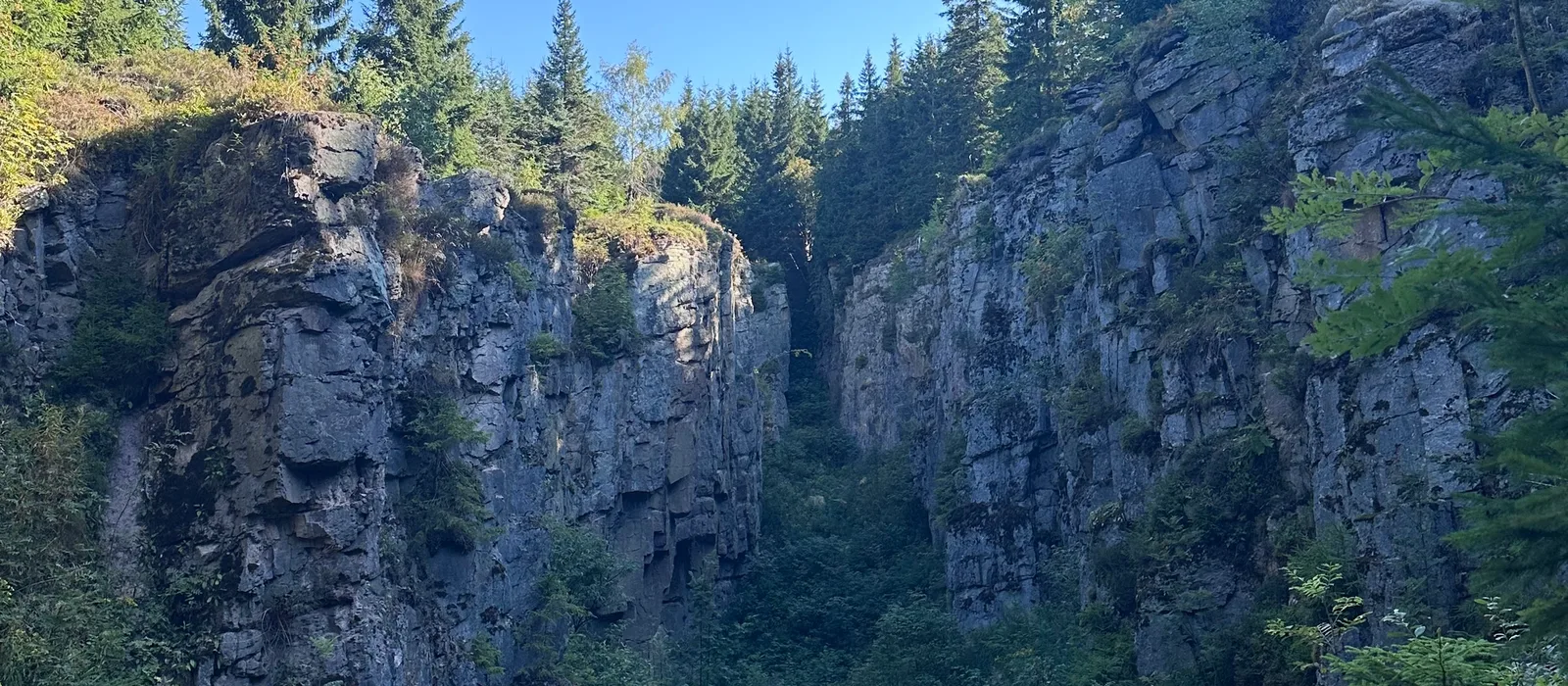
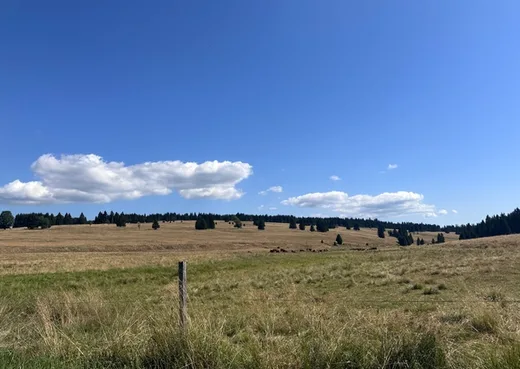
As you approach, it almost feels out of place. Forests, peat bogs and the silence of the Ore Mountains surround you – and then, suddenly, there’s this enormous industrial ruin.
At first glance, it looks like something straight out of a post-apocalyptic movie.
But Rolava isn’t a movie set.
Behind those concrete walls lies a much darker story.
Rolava at a Glance
Where: Ore Mountains, near the village of Přebuz
Historical name of the area: Sauersack
What was here: A mining and processing complex associated with tin mining
Peak development: World War II
Today: Extensive remains of the former industrial complex
How much time to allow: Approximately 1 hour
Best for: History lovers, fans of industrial heritage, photography and darker, atmospheric places
Visited: August 2026
Sauersack: Why Was Such a Huge Complex Built Here?
The Ore Mountains have been closely associated with mining for centuries. Beneath their surface lay deposits of silver, tin, cobalt, iron and, later, uranium.
The area around present-day Rolava was known by its German name, Sauersack, and tin had been mined here long before World War II.
But the war changed everything.
Tin was a strategic raw material for the war industry, and Nazi Germany needed to exploit domestic sources. A large mining and ore-processing complex was therefore built in this remote part of the Ore Mountains.
And when you stand in front of the ruins today, you finally realise that this wasn’t some small mountain mine.
This was an industrial operation.
Huge, technically complex and highly ambitious for its time.
Operational buildings, an ore-processing plant and all the necessary infrastructure were built to allow the extracted material to be processed directly here in the mountains.
But there is also a much darker side to the story behind the complex.
A Place Marked by War
During World War II, the complex was also associated with a prisoner-of-war camp and the forced labour of prisoners of war.
And that completely changes the way you look at Rolava.
It’s easy to come here because of the impressive ruins, pull out your camera and think you’ve discovered the perfect URBEX location.
But once you know the history of the place, the concrete walls suddenly look different.
They aren’t simply an interesting backdrop for photographs. They are remnants of a period when people worked here in conditions that are difficult for us to imagine today.
That’s why, in our opinion, Rolava isn’t a place you visit simply to “take a few cool photos.”
It’s worth knowing what you’re actually looking at.
And Then Came the End
After World War II, the complex lost its original purpose and operations were shut down. The technology disappeared, the buildings gradually deteriorated, and the enormous industrial complex slowly became the ruin we see today.
Nature has had almost eighty years to reclaim the site.
And that may be the most fascinating thing about Rolava.
The clash between industry and nature.
On one side, massive reinforced-concrete structures designed to help humans extract the maximum from the mountains.
On the other, forest, water, grass and the harsh Ore Mountain weather, slowly dismantling them year after year.
And nature is clearly winning.
The First Look at Rolava
Photographs don’t quite prepare you for its sheer size.
When you stand directly in front of the main ruin, you suddenly realise just how enormous the entire complex must once have been.
The sky is visible through empty window openings. Trees grow out of some sections. The concrete is cracked, the structures are long gone, and where there must once have been the noise of machinery and workers, there is now almost complete silence.
And that silence is what makes Rolava so atmospheric.
There are no cafés.
No souvenirs.
No manicured paths.
Not even a polished exhibition explaining every detail.
You’re simply standing in front of an enormous piece of history, left to imagine for yourself what this place might once have looked like.
You Only Understand Its Scale from Above
If there’s one thing that shows Rolava in a completely different light, it’s a view from above.
From the ground, you see individual concrete walls and the skeletons of buildings.
From above, however, the separate pieces suddenly come together as one enormous complex.
You can finally see just how extensive the site once was – and how strangely it now sits in the middle of the green Ore Mountains.
A huge grey scar being slowly swallowed by the forest.
For us, the contrast between the concrete and the surrounding landscape captures Rolava better than anything else.
That’s why we decided to use our drone here.
What do you think of our aerial footage?
If this is part of the same travel series, I’d keep the next article in this exact style: atmospheric opening, historical context, personal reaction, and a strong visual ending.
Video
Rolava
Is Rolava URBEX?
Today, Rolava often appears on lists of Czech URBEX locations, and it’s not hard to see why.
Visually, it has everything: crumbling concrete, empty openings, remnants of industry, rust, water, forest and that unmistakable feeling of abandonment.
But we wouldn’t see it as URBEX alone.
In our opinion, it’s much more interesting as a piece of the Ore Mountains’ industrial and historical heritage.
It’s also important to treat the ruins themselves with respect. Old industrial sites are not playgrounds. Crumbling concrete, exposed openings, unstable structures and hidden drops can all be dangerous.
No photograph is worth taking unnecessary risks.
The Ore Mountains Have Two Faces
And Rolava showed us the lesser-known one perfectly.
When you think of the Ore Mountains, you might picture Klínovec, cross-country skiing, peat bogs or endless forests.
But beneath all of that lies a landscape that humans have been transforming for centuries.
They mined it.
Built factories in it.
Established towns and settlements.
Drew borders across it.
Mined tin, silver and uranium.
And then, in some places, simply walked away.
Rolava is one of the most visible remnants of that story.
Maybe that’s precisely why it felt so much more at home in the Ore Mountains than some perfectly restored tourist attraction ever could.
It’s raw.
Imperfect.
And real.
Is Rolava Worth Visiting?
For us, absolutely.
But don’t expect a traditional tourist attraction.
If you’re looking for a polished site with refreshments and information boards around every corner, Rolava probably won’t be your cup of tea.
But if you’re interested in:
- the history of the Ore Mountains,
- mining,
- World War II,
- industrial architecture,
- URBEX,
- photography,
- or simply places with a powerful atmosphere,
then Rolava definitely deserves a spot on your list.
What Surprised Us Most About Rolava?
Its size.
Of course, we knew what was here before we came. We had seen the photographs.
But reality is different.
When you walk among the remains of the complex and then see the entire site from above, you begin to understand just how enormous it must once have been.
The second thing was the silence.
It’s strange to stand in a place where machinery and hundreds of people must once have filled the air with noise, and today hear practically nothing but the wind moving through the treetops.
We saw a piece of the Ore Mountains that nature has been trying to reclaim for decades.
For the full article, I’d place this section just before the conclusion—it works especially well as the reflective, responsible ending after the historical and visual parts.


Discussion
Comments
No comments yet. Be the first to share your thoughts.