
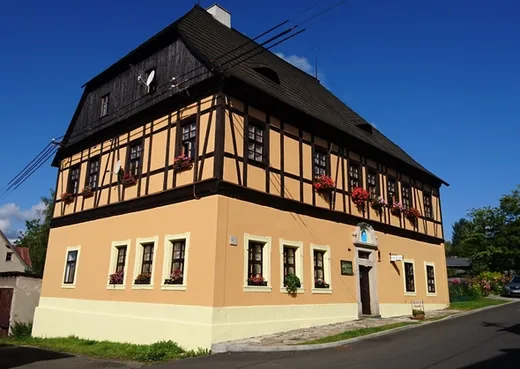


In just one weekend, the Ore Mountains showed us several completely different sides of themselves. The abandoned settlement of Rolava felt raw and almost post-apocalyptic, while the area around Jáchymov is a powerful reminder of one of the darkest chapters in our modern history.
Vlčí jámy is different.
Here, mining history has blended with nature so perfectly that at first glance, you might not even realise that one of the area’s most remarkable natural attractions was largely created by human activity.
And if you make it this far, we think it would be a shame to walk only to Vlčí jáma, turn around and head straight back. A much better option is to complete the full loop from Horní Blatná via Vlčí jáma and Ledová jáma to Blatenský vrch and its lookout tower, before descending back into town.
This is exactly the kind of hike that made us fall in love with the Ore Mountains so quickly. Forests, very few people, mining history, unusual rock formations and, at the end, views stretching above the treetops.
Horní Blatná: a town built on tin mining
We start our hike in Horní Blatná.
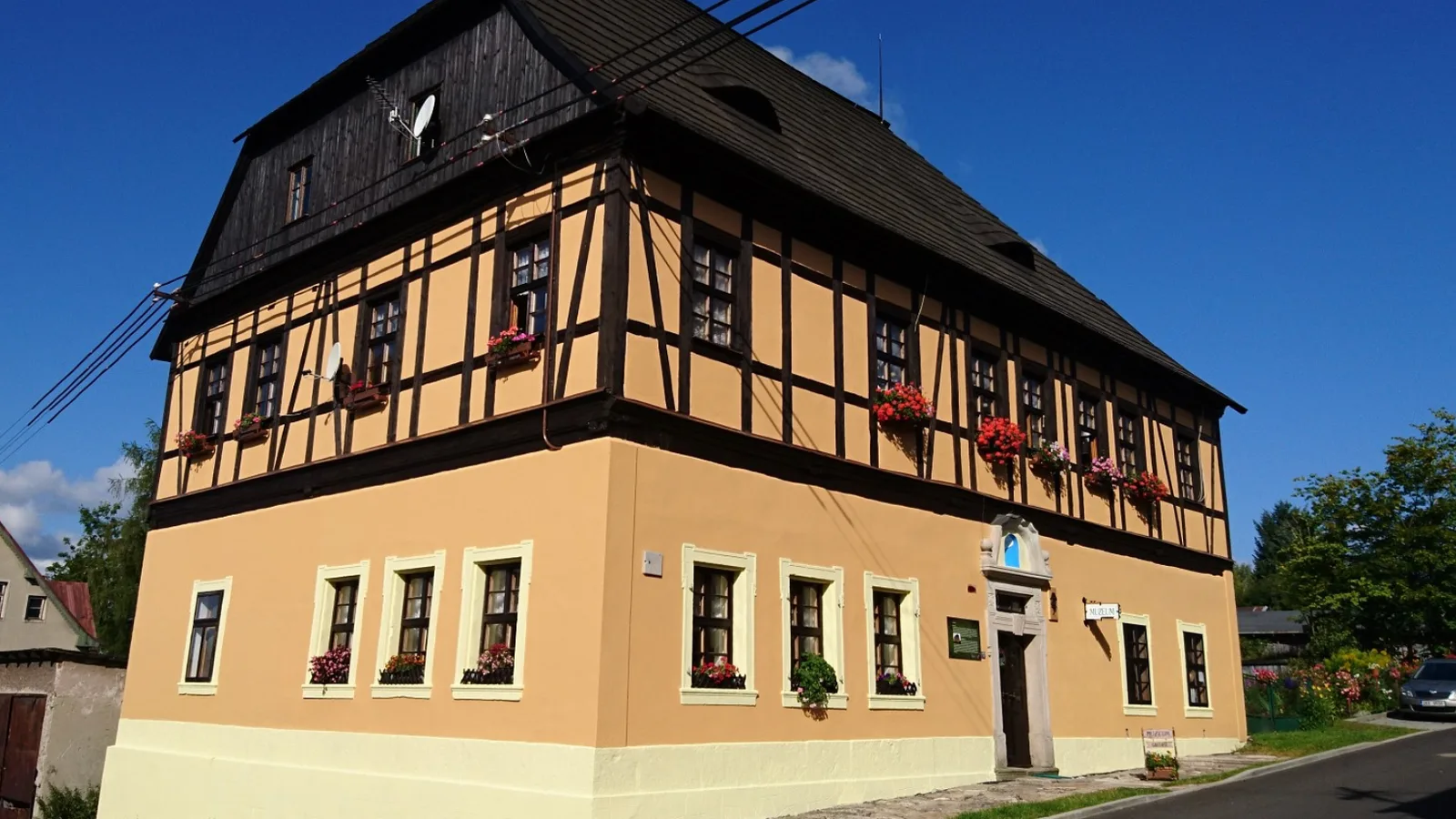
Today, it is a small and relatively peaceful town in the Ore Mountains, but its history is closely tied to mining. For centuries, the surrounding mountains were mined mainly for tin ore, and that mining past has left traces across the landscape that are still clearly visible today.
And some of them are truly enormous.
So when we set off from Horní Blatná, this is not just another walk through the forest. We are heading out to see what several centuries of mining can do to an entire mountain.
Vlčí jáma: when a mine collapses
After walking through the forest, we finally reach the main destination.
Vlčí jáma.
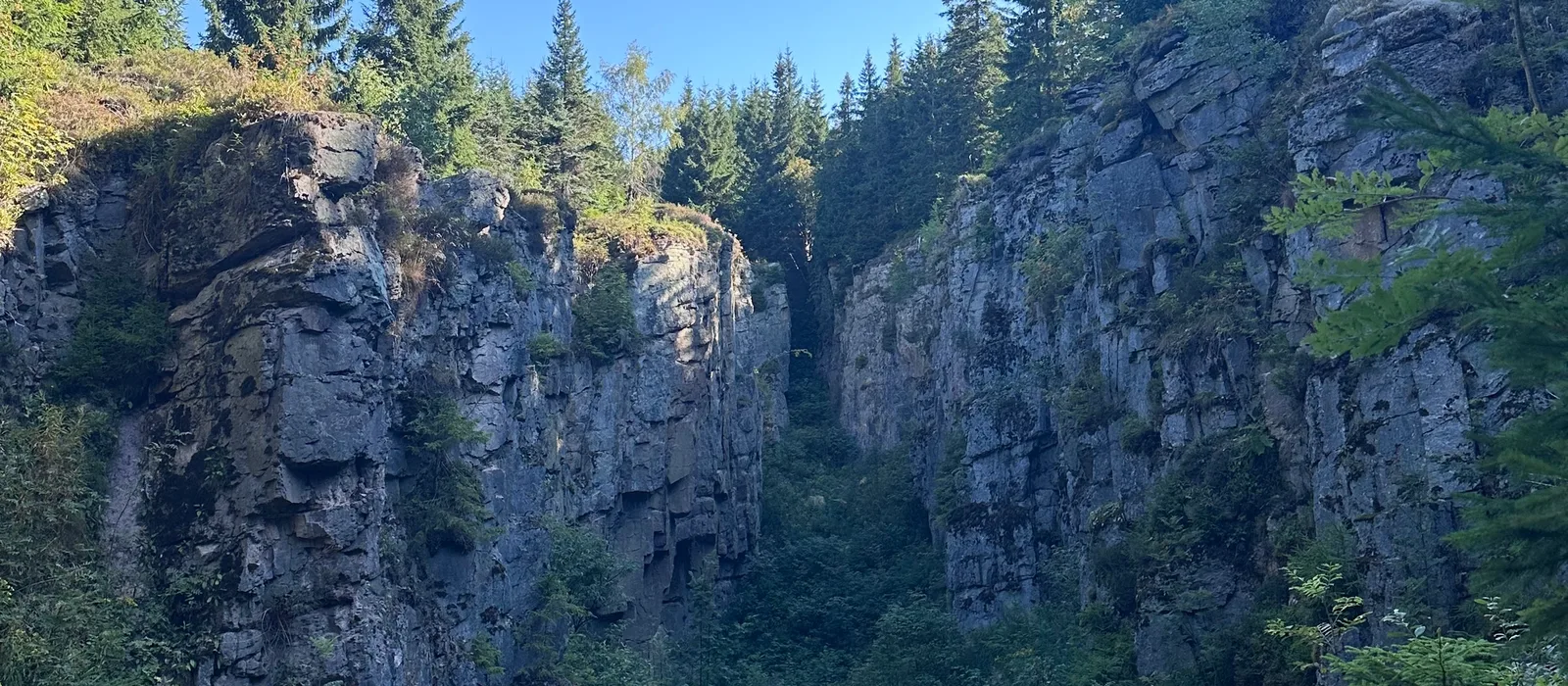
If you are expecting a classic cave or a natural chasm, you may be surprised. Vlčí jáma is, above all, a remnant of historic tin mining.
The Wolfgang mine once operated in this area, and over many years of mining, an extensive network of underground passages and chambers was created. Some of them gradually collapsed, leaving a huge depression on the surface. Nature then took over and finished the job.
Today, the walls are covered with vegetation, trees grow between the rocks and the whole place looks as though it has always been part of the landscape.
But it hasn’t.
When you look down into the pit, you are actually standing above the remains of a former mining site.
And it is exactly this combination of human activity and nature that makes Vlčí jáma so fascinating.
Tin shaped the entire Ore Mountains
During our weekend in the Ore Mountains, we started to realise one thing: you cannot really understand this region without understanding its mining history.
Rolava showed us the industrial mining of the 20th century. Jáchymov told the story of silver and, later, uranium. And the area around Horní Blatná takes us much further back to the history of tin mining.
For centuries, people dug into these mountains, carved out tunnels and gradually transformed what lay beneath the surface.
The mines have long since disappeared, but the landscape still carries their scars.
Vlčí jáma is one of the most striking examples.
Ledová jáma: the natural refrigerator of the Ore Mountains
Then we reach a place that we may have enjoyed even more.
Ledová jáma.
At first glance, it looks like another rocky crevice. But its name, which literally means Ice Pit, is no coincidence.
Cold air becomes trapped deep inside the cavity and, thanks to its unusual microclimate, snow and ice were historically able to survive here well into the warmer months of the year.
The principle is actually quite simple.
Cold air is heavier than warm air, so it sinks and remains trapped inside the deep, poorly ventilated hollow. Sunlight barely reaches the lowest parts of the pit either.
The result is something like a natural refrigerator.
And you can feel the difference in temperature yourself. One moment you are walking through a pleasantly warm summer forest, and the next noticeably colder air starts flowing out from between the rocks.
The Ore Mountains have basically created their own air conditioning.
You can no longer go inside
Ledová jáma used to be more accessible in the past, but today it is important to respect the barriers and restrictions around the site.
And that makes sense.
Historic mining structures can change over time, rocks can become unstable and places that look perfectly safe at first glance may not be safe at all.
No photograph is worth taking an unnecessary risk for.
Even from the designated safe areas, however, you can still get a good idea of how deep the entire cavity continues below.
And now up to Blatenský vrch
From the pits, we continue through the forest towards Blatenský vrch.
Its summit rises to more than 1,000 metres above sea level and is topped by a stone lookout tower.
And this is exactly the kind of lookout tower we like.
No futuristic steel construction. Just a solid stone tower that fits perfectly into the landscape of the Ore Mountains.
After the walk through the forest, there is one final climb before all that remains is to head up the stairs.
The lookout tower on Blatenský vrch
Once you reach the top, you finally understand why it would be a shame to finish the hike at Vlčí jáma and simply turn back.
The landscape of the Ore Mountains opens up in front of you.
Forests. Hills.
Small villages scattered across the countryside.
And when visibility is good, the views stretch far beyond the Czech side of the mountains.
Places like this show the true character of the Ore Mountains better than almost anywhere else.
They are not dramatic like the Alps.
There are no sharp rocky peaks.
Their charm is completely different.
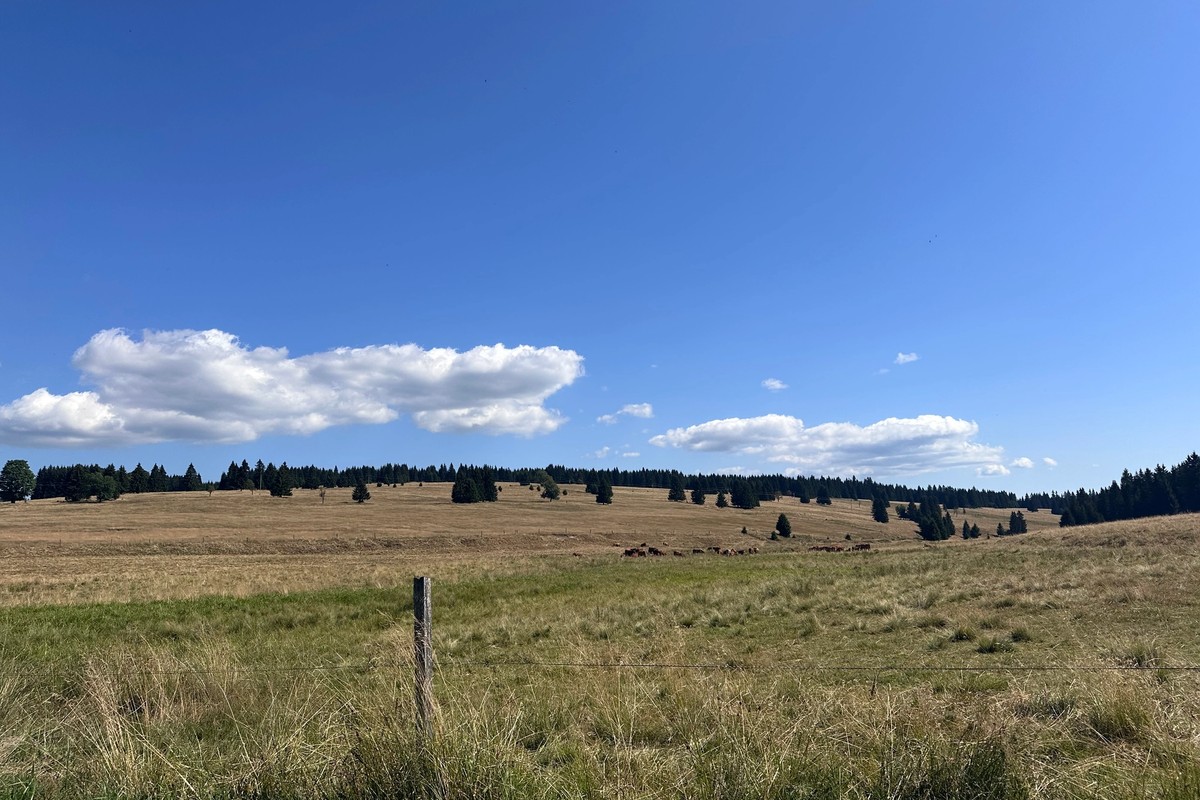
They are broad, green, slightly melancholic and, in some places, almost empty.
And that is exactly what we liked about them.
Back to Horní Blatná
From Blatenský vrch, we continue back towards Horní Blatná.
That is why we recommend doing the whole hike as a loop. You do not have to return along exactly the same route, and in just a few hours you can combine mining history, forests, unusual natural formations and a lookout tower.
Once you are back, it is worth taking some time to walk around Horní Blatná itself.
The town still has a typical Ore Mountains atmosphere, and when you look at the surrounding hills afterwards, you will know that there is much more beneath them than just rock.
There are several centuries of mining history hidden below the surface.
Is the hike suitable for children?
In our opinion, yes, as long as they are used to walking.
The loop itself is not particularly physically demanding, but around the collapsed mining areas it is obviously important to keep an eye on children and stay on marked trails and in safe areas.
We would not choose this route for a stroller, though. The forest terrain and some sections of the trail are much better suited to normal hiking.
Sturdy footwear is a good idea for adults too.
When is the best time to go?
We visited the Ore Mountains in summer, and for this particular hike it made a lot of sense.
Much of the route runs through forest, so even on a warmer day you are not constantly walking in direct sunlight.
The loop around Horní Blatná must also be beautiful in autumn, when the surrounding forests change colour.
In winter, however, we would expect completely different conditions.
The Ore Mountains can live up to their rugged reputation very quickly.
Because beneath almost every beautiful view, there is a story waiting to be discovered.


Discussion
Comments
No comments yet. Be the first to share your thoughts.