



There are trips from which you bring back mostly beautiful photographs. And then there are places from which you carry away, above all, a story. For us, the Jáchymov region undeniably belongs to the second category.
Why this article will be a bit more historical
Please forgive me this time for a slightly larger dose of history. I love history, and the period around the 1950s has long been one of my deep interests—not just in our country, but in a global context. Even though calling such a dark era a "favorite" might sound a bit strange, the world transformed incredibly in just a few short years, and so many monumental events unfolded that this part of history has never ceased to fascinate me. If you enjoyed the TV series Chernobyl and similar shows, this place is ideal for you. Personally, I hope to visit Chernobyl one day (which won't be possible in the coming years, if ever again).Furthermore, I have a weakness for dark tourism—places associated with a heavy, tragic, or simply uncomfortable past.
Not because there is anything appealing about human suffering, but because it is at these places that history stops being just a few paragraphs in a textbook. Suddenly, you are standing exactly where it actually happened. You feel the utmost respect and reverence for the place.So yes—when we combined Jáchymov, the uranium mines, Shaft No. 1, and the Red Tower of Death into a single day, my history-loving and dark-tourism heart was thrilled.
And that is exactly why this article will probably be a bit more detailed than our usual travelogues.
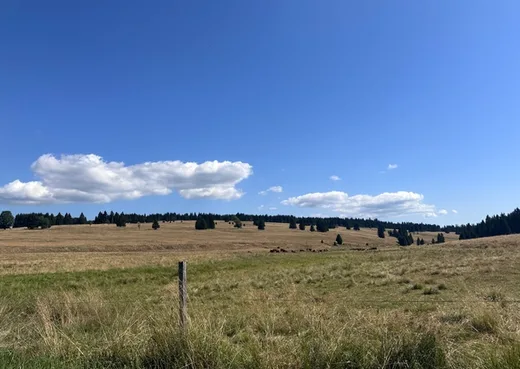
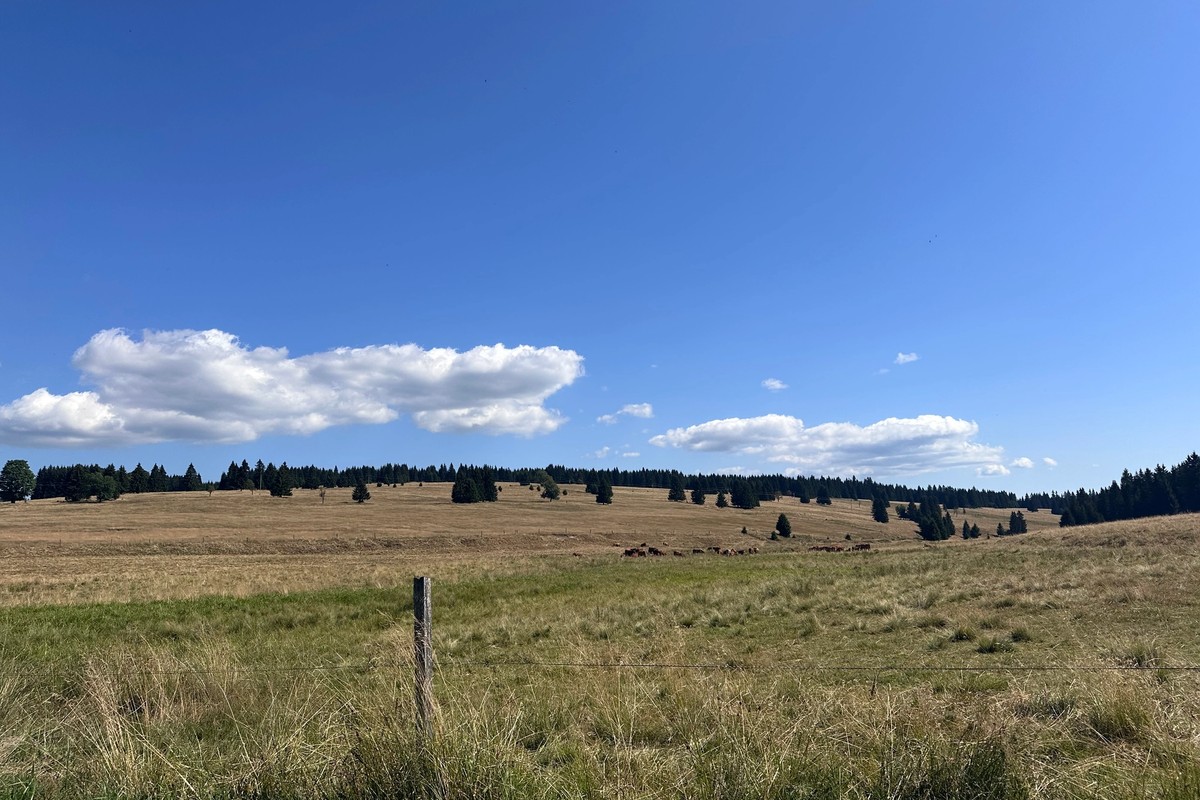
During our weekend, we came to know the Ore Mountains (Krušné hory) as a landscape of magnificent views, deep forests, and almost deserted paths. Yet, beneath their surface hides a completely different world.
A world of silver, uranium, mine shafts, and labor camps. And also the stories of people for whom these mountains were definitely not a place of relaxation. If you truly want to understand this part of history, we believe it is not enough to visit just one spot. Together, Jáchymov, Shaft No. 1, and the Red Tower of Death create one of the most powerful historical trips you can experience in the Ore Mountains.
Jáchymov: The town that changed history several times
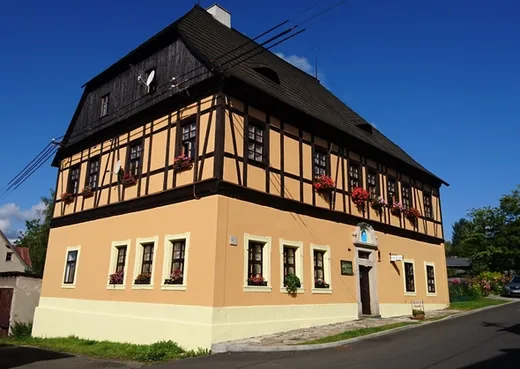
At first glance, Jáchymov may seem like a slightly weary spa town wedged between the slopes of the Ore Mountains. Yet, its history is extraordinary.At the beginning of the 16th century, a rich deposit of silver was discovered here, and within a few years, one of the most prominent mining towns in Europe at the time sprang up. It was right here that the famous Jáchymov thalers (tollary) were minted.
Their German designation, Joachimsthaler, was gradually shortened to Thaler, and it is from this very name that the word dollar was later derived.
So, every time you pull out a dollar bill in the US, a tiny linguistic trail leads right back here to the Ore Mountains.
However, silver was not the last resource destined to change Jáchymov forever.
From Silver to Radioactivity
The Jáchymov mines also contained pitchblende—a uranium ore that, for a long time, was treated more as a byproduct of mining.It is precisely with the Jáchymov ore that the research of Marie and Pierre Curie is connected. At the end of the 19th century, they managed to isolate new radioactive elements from material originating right here in Jáchymov. This is how Jáchymov entered the story of the beginnings of radioactivity research.
And it was destined to take center stage in world events once again. This time, in a significantly darker way.
Uranium Becomes a Strategic Resource
After World War II, uranium was no longer just an object of curiosity for scientists. It was a strategic resource. The Cold War was beginning, and the Soviet Union needed uranium for its nuclear program. The Jáchymov region had the supplies.
And Czechoslovakia found itself in the Soviet sphere of influence. Intense mining followed, forever changing not only the local landscape but, above all, the lives of thousands of people. After the communist coup in 1948, forced labor camps and prison labor camps became part of the system.
Alongside other prisoners, people convicted for political reasons found themselves there.
And it is their story that remains one of the darkest chapters of the Jáchymov region today.
Shaft No. 1: This Time We Go Underground
You can read about the history of mining. You can look at old photographs. You can stand in front of an abandoned mine. But you get a completely different feeling the moment you step underground. Shaft No. 1 (Štola č. 1) is located near Jáchymov and today allows visitors to peek into the environment where the miners worked.Helmet on. And in we go.
The temperature drops, the daylight gradually vanishes, and all that remains around you is rock, mine supports, and a narrow corridor. Suddenly, mining stops being just abstract history.
Don't forget that you must book your ticket for the guided tour in advance. There is a huge demand for these tours!
You Don’t Need to Go Several Hundred Meters Underground
It is precisely in places like this that one realizes how little it takes. You don't have to descend a kilometer deep. Just a few minutes in the cold, damp underground is enough to imagine spending a work shift here instead of a short tour. And then another.
And another.Without today's equipment. Without comfort. And in the case of some prisoners, also without the choice to simply refuse to go down there.
This is no longer a typical tourist attraction. We were about 100 meters underground.
Jáchymov Hell
When you step out of the shaft back into daylight, the story doesn't end.On the contrary.
A whole network of mines and prison camps connected to uranium mining once existed around Jáchymov. One of the most famous was the Svornost camp. Others included Rovnost, Nikolaj, or Bratrství. Today, an educational trail called "Jáchymov Hell" (Jáchymovské peklo) leads through the landscape, commemorating the sites associated with mining and repression.
And this is where one of the most powerful contrasts of the entire trip emerges. Today, you walk through a beautiful forest in the Ore Mountains. Birds, trees, mountain air.
Yet, a few decades ago, prisoners walked through the very same landscape on their way to a shift in the uranium mines. The landscape remained. Its meaning changed.
Jáchymov Hell: The Daily Life of Prisoners
When you walk through the landscape around Jáchymov today, it is hard to imagine how different these places looked in the 1950s.
Back then, a system of prison labor camps operated around the uranium mines. It wasn't just people convicted of ordinary crimes who lived behind the barbed wire. Following the communist coup in 1948, political prisoners were also sent here—opponents of the regime, people convicted in staged trials, clergymen, soldiers, intellectuals, or people accused of attempting to escape across the border.
Alongside them worked prisoners convicted of actual criminal offenses. Thus, the fates of people with completely different life stories met in one place—during hard labor tied to uranium.
The Shift Didn’t Just Begin in the Mine
One of the things a visitor today might not easily realize is that the work underground itself represented only a fraction of the daily exhaustion.
Prisoners had to endure roll calls, inspections, transfers between the camp and the workplace, and only then the actual work shift. Once it ended, the journey back to the camp awaited them.All of this regardless of the Ore Mountains' weather.
Rain and mud in the summer. Snow, freezing temperatures, and wind in the winter. And the next day, all over again.
The work shifts themselves were long and physically demanding, usually operating on a shift-work basis. However, you also have to factor in the transfers, inspections, and the rest of the camp regime. The actual time a prisoner spent each day in the work process and everything around it was therefore substantially longer than the shift itself.
The "Mauthausen Stairs"
Steep stairs, which the prisoners used to move between different parts of the compound and workplaces, are also heavily associated with the Jáchymov uranium camps. The nickname "Mauthausen Stairs" referred to the infamous staircase at the Nazi concentration camp Mauthausen.
And it is right here that the brutality of the local daily routine is clearly visible.
Imagine that you are not walking up the stairs like a tourist today.You have a grueling shift behind you.
You are tired, dirty, often inadequately dressed for the Ore Mountains' weather—and before returning to the camp, another immense physical burden awaits you.
Small details like these can bring the lives of the prisoners much closer to us than mere numbers ever could.
Who Actually Ended Up in the Jáchymov Camps?
I would emphasize this in the article, as it is easy to form a simplified idea that only political prisoners worked in the uranium mines.
The reality was more complex.At various times, the camps held prisoners of war, ordinary criminals, and people sentenced by the communist regime for political reasons.
Among the political prisoners were people of all professions and social classes. Former soldiers. Priests. Students. Scouts. Clerks. Business owners. Intellectuals. People connected to the previous democratic regime.
But also individuals whose only "crime" might have been an attempt to leave Czechoslovakia or helping someone else escape. This is precisely why the Jáchymov region is not just a monument to mining today. It is a reminder of the mechanism of political repression in communist Czechoslovakia.
Barbed Wire Right Above the Town
I would also strongly feature the Nikolaj camp in the article, along with the infamous way prisoners were transferred. During some of these movements, prisoners were kept in a tightly packed formation encircled by a steel cable—the prisoners nicknamed it the "Jáchymov bus."So, it wasn't a bus in the literal sense. It was a humiliating way to control a group of people on their way to the workplace and back. This is exactly the kind of detail I would let sink in for a moment in the article, without any unnecessary dramatization.
The Red Tower of Death
And then you arrive at a place with a name that sounds almost exaggerated.T
he Red Tower of Death (Rudá věž smrti).
Yet, once you learn about its history, you realize that the dramatic name is not the most terrifying part. The tower stands on the grounds of a former uranium ore processing plant near Ostrov.It was here that uranium ore from Jáchymov and other Czechoslovak mines was processed.
And political prisoners worked here too.
After years, the Red Tower has opened to the public, and you don’t need to book your tickets in advance. You just show up and explore the grounds. A guided tour takes place once a day.
Working with Uranium with Almost No Protection
The workers' task included, among other things, sorting and processing the uranium ore before further transport. Today, the word radioactivity automatically brings to mind protective equipment, dosimeters, and strict safety regulations.
Back then, the reality was different. Prisoners came into direct contact with uranium ore and radioactive dust under conditions that, from today’s perspective, are utterly unimaginable.
The dust got into their clothes. Into their hair. Into their lungs. And the workers spent long shifts in this environment. The health consequences for many of them were severe.
Why the "Red Tower of Death"?
The dominant feature of the site is a tall brick tower that was part of the ore processing technology. Today, it looks almost inconspicuous.
And that is perhaps the most disturbing part. If you were driving past without knowing the history, you might mistake it for just another abandoned industrial site. An old factory. A chimney. A remnant of socialism. But then you read the stories of the people who worked here. And suddenly, you are not looking at an industrial monument. You are looking at a place of memory.
Uranium from the Ore Mountains and the Soviet Nuclear Program
There is another fascinating dimension to the whole story. The uranium mined in Czechoslovakia was supplied to the Soviet Union at a time when it was building its nuclear arsenal. Suddenly, Jáchymov—which we know today as a small spa town in the Ore Mountains—is not just a local historical topic.It is part of a much larger story. The Cold War. Superpower rivalry. The nuclear arms race. And the people who paid for this geopolitical struggle with their health, and sometimes their lives.
Places that Make Sense to Visit Together
That is exactly why we would recommend combining Jáchymov, Shaft No. 1, and the Red Tower of Death into a single day. Each place shows a different part of the same story. Jáchymov explains why mining took place here in the first place. Shaft No. 1 gets you into the mine environment. And the Red Tower of Death shows just how far the system connected to uranium mining could go.
On their own, they are interesting. Together, they are much more powerful.
Would We Recommend This Trip?
Absolutely.However, not as a cheerful family outing moving from one attraction to the next. We would recommend it to anyone interested in 20th-century history, mining, the Ore Mountains, or modern Czech history. The Ore Mountains are beautiful.
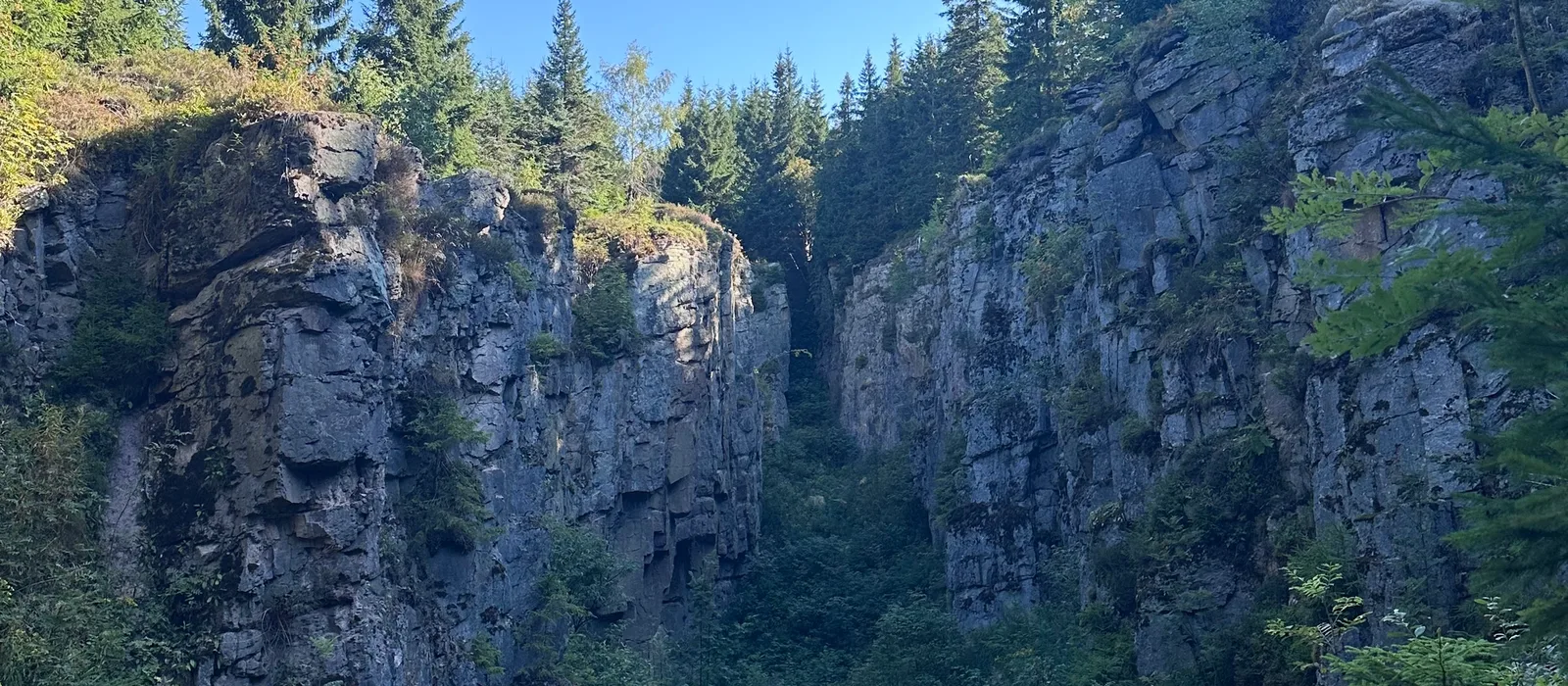
During our weekend, we saw deep forests, the Wolf Pits (Vlčí jámy), the abandoned Sauersack (Rolava) tin mine, and views from the mountain peaks. But it was the Jáchymov region that reminded us that a landscape doesn't have to be interesting only because of how it looks.
Sometimes, it is much more important to know what took place there. And when, after visiting the mine shaft, you stand in front of the Red Tower of Death, looking at the surrounding green hills while knowing everything that was happening here just a few decades ago, the Ore Mountains feel completely different than before.
Perhaps that is precisely why they are so fascinating.

Discussion
Comments
No comments yet. Be the first to share your thoughts.