
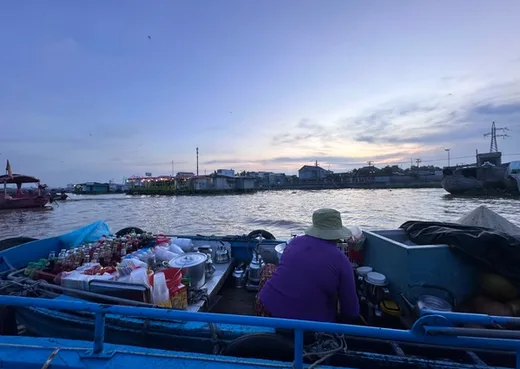


If you read my WandersKaty blog regularly, you already know that our journey through southern Vietnam was one wild ride. After following the waterways of the Mekong Delta, we are now heading straight into the heart of the action.
Welcome to Ho Chi Minh City – although locals and those who remember the old days still call it Saigon.
Saigon is like an energy drink in city form. It is a cocktail made from millions of motorbikes, the scent of coriander, colonial architecture, and heat and humidity so intense that your hair immediately forgets any styling you may have attempted.
We arrived in October, during the rainy season, and it turned out to be an excellent choice. The rainfall was gradually becoming less frequent, and although the air was hot and heavy like a blanket, that is simply part of the true Southeast Asian atmosphere.
That said, we still got caught in several torrential downpours and ended up soaked to the bone.
Pack your shorts, switch on the fans, and let’s go!
Practical Information: Time Difference and Saigon City Maths
Before we throw ourselves into the streets, let’s clarify a few basic things so that Southeast Asian reality does not catch you completely off guard the moment you wake up.
Time difference
Vietnam is in the GMT+7 time zone.
In practical terms, this means that when the Czech Republic is observing daylight saving time, Saigon is five hours ahead. If you travel to Vietnam in October, as we did, just as the clocks switch back to winter time at home, the difference increases to six hours.
Prepare for a little jet lag. During the first few days, you may fall asleep with the chickens and wake up at sunrise. On the bright side, that is the perfect time to head out for a morning bowl of pho.
How is Saigon divided?
The city is not primarily divided into neighbourhoods with individual names, but into districts, known in Vietnamese as quận.
There are 24 of them in total, but as a tourist, you mainly need to know that District 1 is the absolute historical and modern centre. This is where you will find most major landmarks, skyscrapers and hotels.
District 3 borders District 1 and is slightly quieter and more authentic.
District 5 is home to Cholon, Saigon’s Chinatown, while the modern Landmark 81 skyscraper can be found nearby in Bình Thạnh District.
Plastic Millions: Why Vietnamese Dong Survives the Rain
When you pay for a baguette at a street stall, you may notice something unusual: Vietnamese banknotes from 10,000 VND upwards are made entirely from polymer.
In Saigon’s intense heat and humidity, ordinary paper notes would quickly turn into a soggy, crumpled mess. Polymer banknotes are water-resistant, so even if you get caught in an October downpour, you can simply dry your wallet afterwards.
They also contain transparent plastic windows, which makes them look surprisingly futuristic.
One small traveller’s trap: the 20,000 VND note, which is blue, and the 500,000 VND note, which is turquoise-blue, look quite similar.
In the evening chaos of a busy street, they are easy to confuse. Make sure you do not leave a tip for your soup worth half your daily budget.
First Steps: The Airport and Your Saigon Baptism of Fire
If you are flying to southern Vietnam, your journey will most likely begin at Tan Son Nhat International Airport in Saigon, unless you are heading directly to the beaches of Phu Quoc Island.
The moment you walk through the arrivals hall, you will be hit by a wave of heat and crowds of taxi drivers.
Our golden advice is simple: connect to the airport Wi-Fi and immediately download Grab, the local equivalent of Uber.
A Grab ride is usually much cheaper, the price is fixed in advance, and nobody can overcharge you.
We travelled from the airport on scooters, and it was an absolutely brilliant decision.
Weaving through the endless human anthill with the wind in our hair was an incredible experience and felt like true Saigon freedom.
If you are not easily frightened, give it a try too.
What to See and What Not to Miss: From War History to French Elegance
Saigon combines a harsh history with French colonial charm.
Most of the main sights in District 1 can easily be visited on foot. Just prepare yourself for the fact that crossing the road here is an extreme sport.
Do not stare desperately at the drivers as though begging them to let you cross. Instead, walk slowly and steadily, without making sudden movements, and they will somehow flow around you.
On our first day, we stepped into the road with deep suspicion. After a few days, we had learned to cross like locals.
When I returned to the Czech Republic, I caught myself stopping awkwardly at pedestrian crossings a few times before remembering that cars at home could actually run me over in an instant.
Independence Palace
This is where some of the most important moments in Vietnamese history took place.
Inside, it feels as though time stopped in the 1970s. Expect retro furniture, preserved meeting rooms and underground bunkers.
War Remnants Museum
This museum will grab you by the heart and refuse to let go.
It offers a raw, uncompromising and emotionally demanding perspective on the Vietnam War. Outside, you will find American aircraft and tanks. Inside, there are powerful human stories and photographs.
Visiting the museum is essential if you want to better understand the mentality and history of modern Vietnam.
Notre-Dame Cathedral and the Central Post Office
These two reminders of the French colonial era stand right next to each other.
The red-brick cathedral has been under renovation for quite some time, but the Central Post Office, often associated with Gustave Eiffel, remains an architectural jewel.
It still operates as a functioning post office, so you can send a stylish postcard home from here.
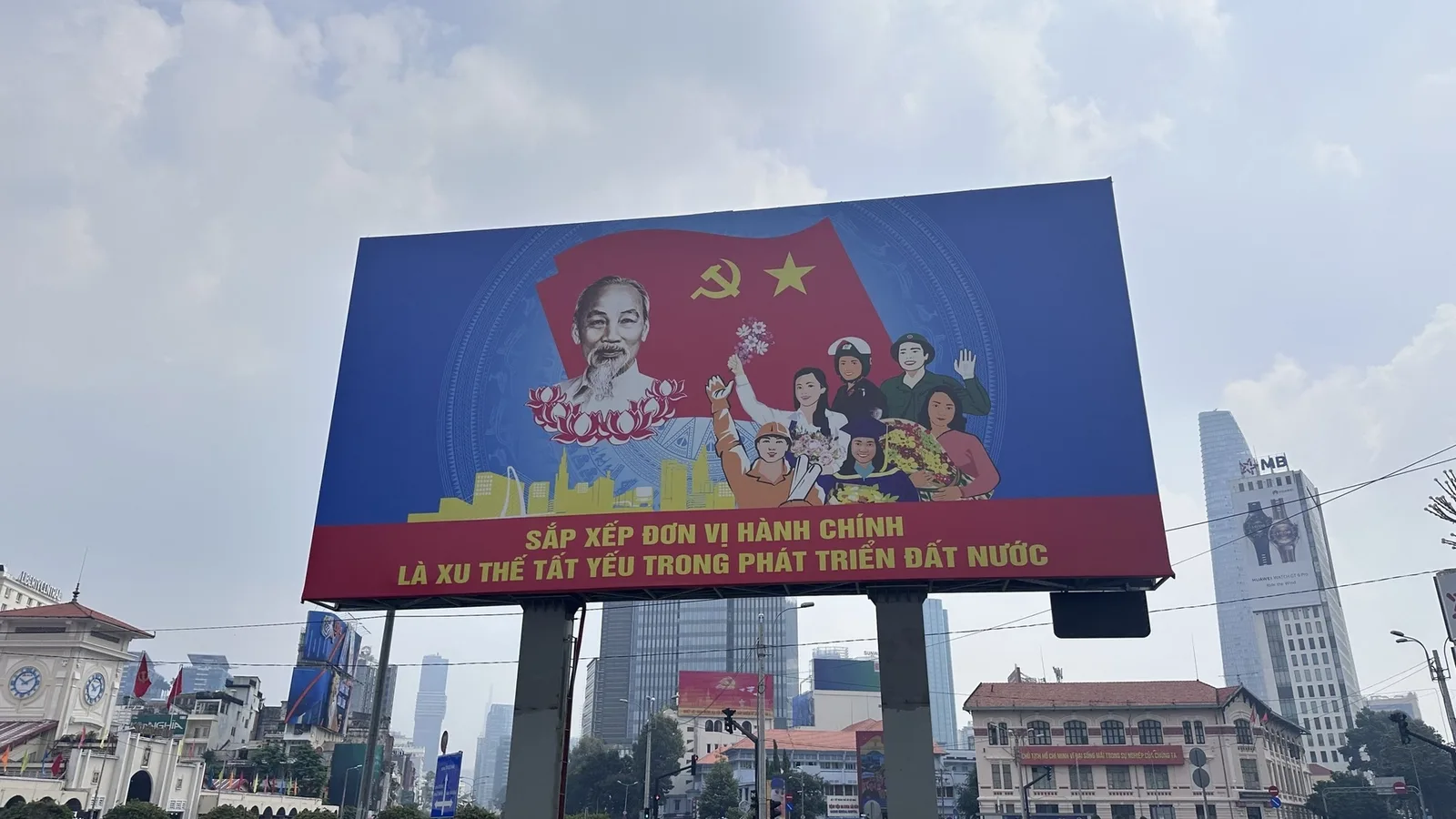
One of the first things you will notice inside is the enormous portrait of Ho Chi Minh hanging on the wall.
Tân Định Church
Head to District 3 to see this striking pink church.
It looks as though it has been taken straight out of a Barbie fairy tale, but it is a fully functioning Catholic church.
Golden Dragon Water Puppet Theatre
This is a completely unique experience that you should not miss, even if theatre is not usually your thing.
Traditional Vietnamese water puppet theatre takes place directly on the surface of a pool. The puppeteers stand waist-deep in water behind a bamboo screen and expertly control wooden puppets representing dragons, fishermen and mythical creatures using long rods.
The performance is accompanied by a live traditional orchestra.
It is colourful, funny and genuinely fascinating. It is also a perfect cultural activity for a hot evening, as you can relax in an air-conditioned auditorium.
Buy your tickets in advance through GetYourGuide.
Saigon’s Most Beautiful Pagodas: Incense Smoke and Mystical Atmosphere
To escape the constant sound of motorbike horns and experience a quieter, more spiritual side of Asia, visit some of Saigon’s temples and pagodas.
Entry is usually free, but remember to cover your shoulders and knees.
Jade Emperor Pagoda
This is one of the most atmospheric temples in all of Vietnam.
The air inside is thick with smoke from hundreds of incense sticks. Everywhere you look, there are carved wooden statues of Taoist deities, shadowy corners and a pond filled with turtles, which symbolise longevity.
The place has an incredibly powerful atmosphere.
Thiên Hậu Pagoda
You will find this pagoda in the heart of Cholon, Saigon’s Chinatown in District 5.
It is dedicated to the sea goddess and protector of sailors.
As soon as you enter, you will notice dozens of enormous incense coils hanging from the ceiling. People attach their wishes to them on small red pieces of paper before lighting the coils and allowing the smoke to rise towards the heavens.
The architecture, including rooftops decorated with intricate porcelain figures, is breathtaking.
Vĩnh Nghiêm Pagoda
For a large and more modern example of a traditional Buddhist pagoda, visit Vĩnh Nghiêm.
It is one of Saigon’s main centres of Buddhism and features a beautiful seven-storey stone tower and a spacious courtyard where local monks hold prayers and ceremonies.
Watch Out for Scams
Saigon is a relatively safe city, but some local scammers have mastered human psychology to perfection.
These are the most common traps we encountered or heard about repeatedly.
The legendary shoe cleaners
You are walking peacefully along the street in a perfectly normal pair of trainers.
Suddenly, a man kneels in front of you and points dramatically at your shoe as though it is covered in dirt. Mine were actually clean as a whistle.
Before you can say that you are not interested, he is already trying to pull the shoe off your foot, handing you slippers and beginning to clean it.
We were exhausted and hungry after a 15-hour flight. We had arrived in the morning and could not check into our accommodation until noon, so we barely had time to react.
He refused to listen when I said I was not interested and then demanded the equivalent of around CZK 500.
Luckily, I did not have any cash with me, only a card, as we had not yet visited an ATM. His service therefore ended up being free.
He was not pleased, but we somehow convinced him that we genuinely had no money.
How do you avoid this? Ignore them, do not let them take your shoe and keep walking firmly.
Easy to say, of course.
Coconut sellers
A friendly man carrying coconuts on a bamboo pole offers to let you place it over your shoulder for a photograph.
While you smile at the camera, he cuts open two coconuts with a machete and then demands an inflated price for both the photograph and the overpriced drinks.
Refuse the photograph or agree on the price in advance.
Pirate taxis
Getting into a random taxi on the street is an invitation to encounter a manipulated meter that runs faster than Usain Bolt.
The solution is simple: download Grab, the Asian equivalent of Uber.
You know the exact price in advance, you can see the driver on the map, and nobody can overcharge you.
A Culinary Adventure: What to Eat and How to Survive It with a Smile
Vietnamese food in Saigon deserves a chapter of its own.
People eat on tiny plastic stools directly on the pavement. Scooters pass within centimetres of your table, loud conversations fill the air and the smell of food is everywhere.
It is impossible for me to tell you exactly where to eat.
Our rule was simple: whenever we saw a place packed with locals, we went in. We never regretted it.
Many excellent small restaurants and food stalls are not even marked on online maps. More than once, we wandered down a forgotten side street and discovered an outstanding stall.
Do not be afraid to explore. That is how you find the real treasures.
Phở Bò
The classic beef noodle soup.
It usually arrives with a huge pile of fresh herbs, including basil and coriander, along with garlic and chilli.
In the morning, a bowl of phở will wake you up more effectively than a litre of energy drink.
Bánh Mì
A crispy French-style baguette filled with pâté, Vietnamese cold cuts, pickled carrot, radish, coriander and chilli sauce.
It costs very little and may be the best snack in the world.
Try the famous street-food institution Bánh Mì Huỳnh Hoa.
Cơm Tấm
A typical Saigon dish made from broken rice, usually served with a marinated grilled pork chop, egg and fish sauce.
Cà Phê Trứng
Yes, you heard that correctly: egg coffee.
It is made with coffee, whipped egg yolk and condensed milk. It tastes like liquid tiramisu and makes a sweet ending to a meal in Saigon’s humid climate.
Personally, I was not completely won over. I preferred the iced green tea that is often served automatically with food, sometimes together with a light vegetable broth.
For a truly wild culinary experience after dark, head to one of the night markets.
Ben Thanh Night Market
When the historic Ben Thanh Market closes in the evening, the surrounding streets come alive with stalls selling seafood, grilled meat and souvenirs.
It is very touristy and prices are slightly higher, but the atmosphere and the smell of smoke from the grills are unforgettable.
Hạnh Thông Tây Market or Chợ Lớn
For a more authentic experience without the tourist surcharge, take a ride into one of the less central districts.
Here, you can try excellent grilled squid, snails prepared in countless ways, known as ốc, or crispy Vietnamese pancakes called bánh xèo.
A Tropical Paradise on a Plate: Fruit You Rarely See at Home
Thanks to its location close to the Mekong Delta, Saigon is overflowing with incredibly fresh tropical fruit.
Forget the supermarket versions imported into Europe. Here, a few coins will buy you a complete explosion of flavour.
Buy fruit directly from local street sellers. They will usually peel it, cut it into a bag and give you a small skewer to eat it with.
Dragon Fruit – Thanh Long
This bright pink fruit has either white or vivid red flesh filled with tiny black seeds.
It is extremely refreshing, full of water and ideal for staying hydrated in Saigon’s heat.
I absolutely love dragon fruit, and in Vietnam I ate so much of it that even I eventually reached my limit.
Rambutan – Chôm Chôm
These small, hairy red balls look rather funny, but inside they contain sweet and juicy flesh similar to lychee.
You can easily peel them with your fingers and eat them by the kilogram beside the stall.
Mangosteen – Măng Cụt
The king of tropical fruit.
Under its thick purple skin, you will find snow-white segments that taste like a divine combination of peach, strawberry and grape.
It is sweet, slightly sour and completely addictive.
Durian and Its Famous Smelly Challenge
You cannot miss this enormous spiky monster.
Durian has such a distinctive smell, often compared to rotting onions, that it is banned from many hotels and public transport systems.
Its flavour is said to be creamy, something like vanilla custard mixed with almonds.
Would you dare to try it?
I did, and I definitely will not be joining the group of people who love it.
Where to Stay: Location Is Everything
The district you choose will shape your entire experience of the city.
Saigon is enormous, so I recommend staying close to the centre.
District 1 – Ben Thanh and Nguyen Hue
This is the absolute heart of the city.
From here, you will be close to the main sights, excellent restaurants and rooftop bars. It is ideal for anyone who wants to have everything important within walking distance.
Bui Vien Street – The Backpacker District
If you love wild nightlife, neon lights, cheap beer and do not mind noise continuing until four in the morning, this is the place to stay.
However, if you actually want to sleep at night, avoid Bui Vien at all costs.
District 3
District 3 lies right next to District 1, but it is noticeably quieter and more authentic.
You will find beautiful cafés hidden inside courtyards, fewer tourists and generally lower prices.
A Darker History: Shadows Beneath the Neon Lights
Saigon is not only about elegant colonial buildings.
The city also carries deep scars and stories that can send a chill down your spine.
The Criminal Underworld of Cholon
Today, Cholon is filled with colourful temples and the scent of spices.
In the past, however, the area was controlled by the feared Bình Xuyên syndicate, a powerful criminal organisation that operated with the approval of corrupt politicians.
The group controlled enormous casinos, opium dens and some of the largest brothels in the world.
At the time, Saigon had a reputation as a city of sin, where human life was often considered cheap.
Carmelite Monastery
For those fascinated by mysterious places, there is a quiet Carmelite monastery built by the French in 1862.
The nuns who lived here were almost completely isolated from the outside world. Their lives were defined by silence, strict fasting and religious discipline.
Many of them died from disease while living in the difficult tropical conditions.
The atmosphere behind the monastery’s thick walls stands in sharp contrast to the noisy metropolis outside.
The Best Views: Where to See Saigon from Above
Looking down at an endless sea of flashing motorbikes is an unforgettable experience.
Here are some of the best viewpoints in the city, including luxurious paid options and several excellent places that are completely free.
Paid Viewpoints: When You Want a Touch of Luxury
Landmark 81 SkyView
Landmark 81 is the tallest building in Vietnam and one of the most recognisable features of the Saigon skyline.
The observation decks are located between the 79th and 81st floors.
The views are absolutely breathtaking. You are quite literally standing among the clouds.
Tickets cost approximately CZK 400–800, depending on the package, but the experience is worth it.
Saigon Skydeck – Bitexco Financial Tower
The Saigon Skydeck is located inside the iconic Bitexco Financial Tower, a skyscraper shaped like a lotus bud with a helipad dramatically extending from its side.
The observation deck on the 49th floor offers a 360-degree view of the Saigon River and District 1.
Admission is cheaper than at Landmark 81.
A useful tip: instead of paying only for the observation deck, take the lift a few floors higher to the bar, order a cocktail and enjoy the view as part of the experience.
Free Viewpoints
Thủ Thiêm 2 Bridge – Ba Son Bridge
This modern architectural landmark connects the historic city centre with the new urban district across the river.
In the evening, the bridge becomes a popular gathering place for local young people.
You can walk across it completely free of charge and photograph the skyline reflected in the Saigon River.
The atmosphere is lively, relaxed and far more authentic than at many of the paid viewpoints.
Rooftop Cafés at 26 Lý Tự Trọng
Entering the building and climbing the old staircase is free.
At the top, you will find several cafés with outdoor balconies and terraces.
You will need to buy at least an iced tea or another inexpensive drink, but in return you get a fantastic view of the busy streets below and the Opera House without paying an expensive entrance fee.
The Best Cafés in Saigon
Coffee culture in Saigon is almost a religion.
Forget boring international chains. Here, cafés are all about original design, hidden courtyards and unexpected interiors.
The Café Apartments – 42 Nguyễn Huệ
This old nine-storey apartment building from the socialist era has been completely taken over by dozens of small independent cafés, boutiques and tea rooms.
Its entire façade glows with signs and neon lights that can be seen from far away.
Simply walk inside and explore one floor after another.
Oromia Coffee & Lounge
Oromia is a peaceful oasis hidden in the narrow streets of District 3.
Before entering, you cross a small bridge over a pond filled with colourful koi carp.
The interior is full of greenery, wood and glass.
It is the perfect place to escape the heat and noise of the city for a while.
Cộng Cà Phê
Although Cộng Cà Phê is a chain, it has a brilliant and instantly recognisable concept.
The interiors are decorated in a retro military style inspired by wartime Vietnam, with army-green walls, old books, vintage posters and enamel mugs.
Their coconut coffee smoothie is especially delicious.
Final Thoughts
Saigon is wild, hot and occasionally catches you off guard with its boldness, but its energy is completely infectious.
Once you find the right rhythm, you will not want to leave.
I am already looking forward to returning, because there was still so much I did not manage to see.

Discussion
Comments
No comments yet. Be the first to share your thoughts.