
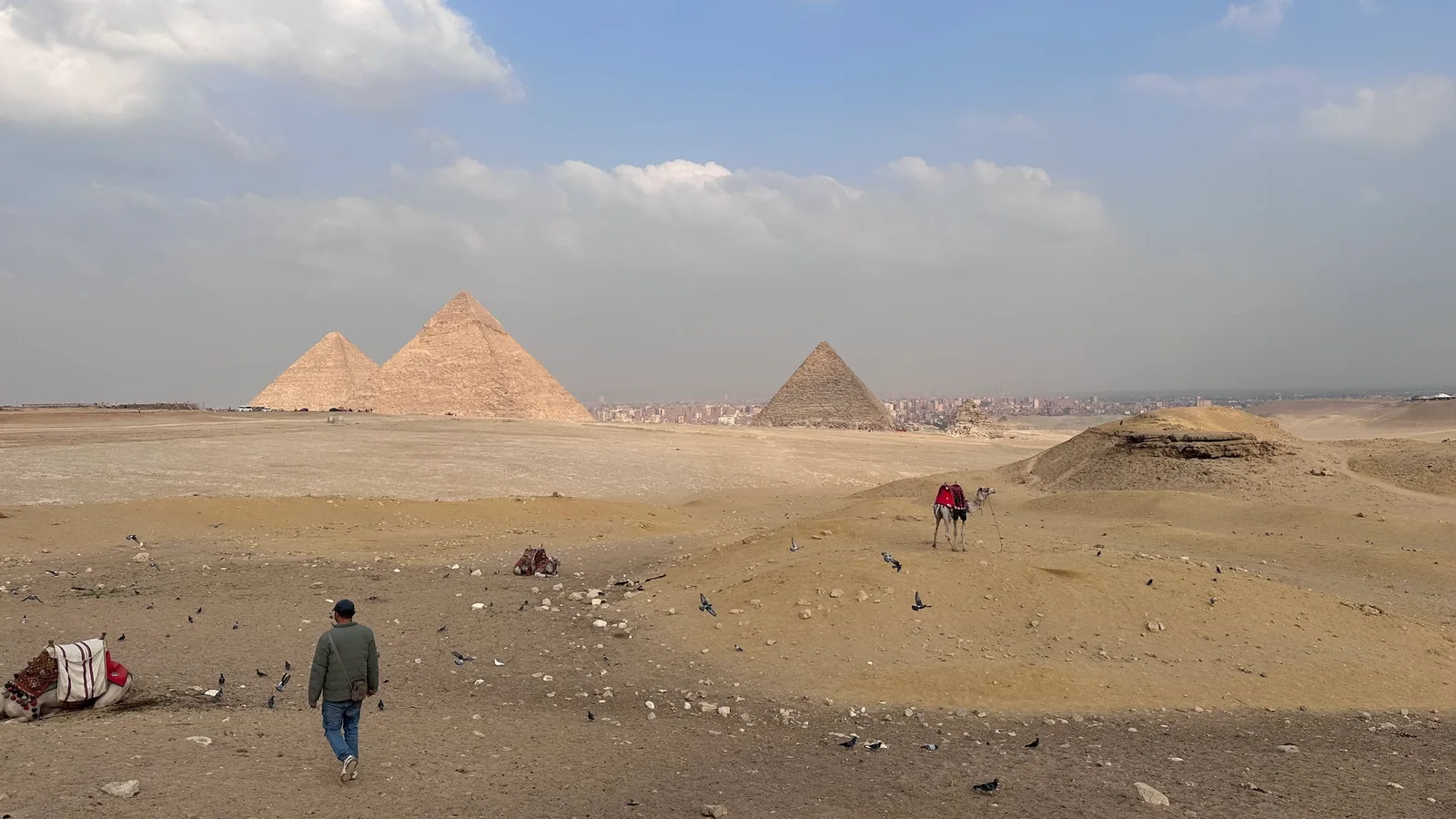
Cairo won't let you just stand around and quietly look at your surroundings. From the very first moment, it honks, stirs up dust, smells of spices, and pulls you into its current of people and cars. It is loud, chaotic, exhausting at times—and simultaneously incredibly alive. During our visit, we headed to the Pyramids of Giza, walked through the city center, and visited the original Egyptian Museum on Tahrir Square. We hadn't seen the new Grand Egyptian Museum at the time, which is why this article is mainly about Cairo as we experienced it.If you are planning to tackle Cairo on your own, you will find practical information here regarding flights, visas, transportation, the pyramids, the old museum, and local food. I’m also adding a few tips that can save you time, nerves, and more than one round of haggling.
- September 2026 Update: The Grand Egyptian Museum (GEM) near the pyramids is now open, and the complete Tutankhamun collection has been relocated there. However, the original Egyptian Museum on Tahrir Square has not closed and is still very much worth a visit. Always verify current prices and opening hours before your trip.
How to Get to Cairo and How to Find Flights
When searching for flights, enter the route as Prague–Cairo (PRG–CAI). The availability of direct and connecting flights changes depending on the season, so compare multiple dates and also try checking departures from Vienna besides Prague. For cheaper options, always check whether the price includes checked luggage and make sure it’s not two separate reservations.
Pay close attention to the arrival airport as well:
- CAI is the main Cairo International Airport.
- SPX (Sphinx International Airport) lies west of the city and can be especially convenient if your accommodation is located close to Giza. However, a cheaper flight to SPX might not be worth it if you end up paying significantly more for a long transfer afterward.
The best times to visit are outside the peak summer heat. For exploring the city and the pyramids, autumn, winter, or early spring are much more pleasant. If you visit in the summer, head out as early in the morning as possible and don't rely on the thought that you will "somehow manage"—there is very little shade on the Giza plateau.
Tourist Visa for Egypt
Czech citizens require a tourist visa to enter Egypt. One of the options is an electronic visa obtained through the official Egyptian eVisa portal; it is recommended to submit the application at least seven days before your departure. Before your trip, double-check the required passport validity, the current visa fee, and up-to-date entry regulations, as these can change.
Watch out for websites that look official but add a high processing fee to the ticket price. For current safety and entry information, you should also monitor the Ministry of Foreign Affairs of the Czech Republic (or your country).
Transportation from the Airport and Around Cairo
For your first trip from the airport, the most convenient option is a pre-arranged hotel transfer or an Uber, which operates continuously in Cairo. The advantage of using the app is that you know the estimated price beforehand, and you enter your destination without complicated explanations. After landing, check the car's license plate and the pickup location directly inside the app.
For further getting around, a combination of several options works best:
- Uber or Taxi: The easiest choice for Giza, the airport, and evening returns. However, you can spend a surprisingly long time sitting in traffic jams.
- Metro: Fast and cheap for selected trips across the city. However, it won't take you all the way to the pyramids or directly to the airport.
- On Foot: A good choice within a single neighborhood. But Cairo doesn't have a single small downtown area that you can fully walk through in an afternoon.
- Car with a Private Driver: Practical if you want to combine Giza with other more distant locations during a single day. Confirm the price and the scope of the service in advance.
In Cairo, never measure distance just in kilometers. Five kilometers can mean a quick ride, but also a long wait in gridlock. Therefore, do not pack too many places into your itinerary and always factor in a time buffer before every reservation.
The Old Egyptian Museum on Tahrir Square: Is It Still Worth It?
Yes. The pink building of the Egyptian Museum stands right on Tahrir Square and is a piece of Cairo's history in its own right. It opened in 1902 and ranks among the oldest archaeological museums in the Middle East.The exhibits feel old-school in places, the display cases are closely packed, and navigating the layout is not always straightforward. But that is exactly where part of its charm lies—you feel a bit like you’ve stepped into a massive cabinet of discoveries.
The museum still houses extraordinary artifacts spanning from the Predynastic Period all the way to the Greco-Roman era. Among the most significant pieces are the Narmer Palette, the funerary equipment of Yuya and Thuya, the treasures of Tanis, royal statues, sarcophagi, papyri, and ancient jewelry.
However, it is important to know that the Grand Egyptian Museum (GEM) near Giza is fully open as of November 2025, and this is where visitors will now find the complete Tutankhamun collection. If you are visiting for the first time and have enough time, you don't have to choose just one museum: the new GEM offers a modern, spectacular exhibition space, while the museum on Tahrir Square retains its historical atmosphere and pairs excellently with a walk through the downtown area.
The old Egyptian Museum is open daily from 9:00 AM to 5:00 PM, with the ticket office closing at 4:00 PM, and admission for a foreign adult costs 550 EGP. Taking photos with a mobile phone is allowed free of charge, without flash. You can find up-to-date information on the official website of the Egyptian Museum.
The Pyramids of Giza: A Moment That Photos Cannot Capture
Everyone knows the pyramids from textbooks, movies, and postcards. Yet, seeing them in reality is something completely different. It is only when you stand directly beneath the Great Pyramid that its true scale hits you—along with the unbelievable realization that this structure was built more than four and a half thousand years ago.
The Giza complex was constructed for the rulers of the 4th Dynasty. The largest and oldest of the trio is the Pyramid of Khufu (or Cheops), while the other two belonged to the pharaohs Khafre and Menkaure. The site consists not only of the three famous pyramids and the Great Sphinx but also features smaller queen pyramids, mastabas, temples, cemeteries, and the remains of causeways that originally connected the different parts of the royal complexes.
Set aside at least half a day for your visit and arrive first thing in the morning. The distances on the plateau are much larger than they appear on a map. Besides the spaces immediately surrounding the individual pyramids, do not miss the panoramic viewpoint, from which you can see the entire trio rising out of the desert, before moving on to the Sphinx.
Practical Tips for Visiting the Pyramids
- Buy your ticket at the official box office or via the official ticket portal.
- General admission to the Giza Plateau does not include entry inside the pyramids; those tickets are purchased separately, and capacity can be limited.
- Wear sturdy shoes and bring a hat, sunscreen, and plenty of water.
- Decline offers for camels, horses, guides, and "special viewpoints" politely but firmly if you are not interested.
- If you do decide on a ride, agree on the final price, duration, and return location strictly in advance.
- Do not expect decorated chambers inside the pyramids. The corridors are narrow, steep, and hot; those who suffer from claustrophobia can easily skip going inside without any regrets.
According to data from the Egyptian Ministry valid at the time this article was reviewed, the Giza Plateau was open daily from 8:00 AM to 4:00 PM, and general admission for a foreign adult cost 700 EGP. However, prices and regulations regarding movement within the complex are subject to change, so please verify them shortly before your visit. For more details, visit Egyptian Ministry.
The Great Sphinx: The Desert’s Biggest Cat (And Where to Watch Your Back)Right next to the pyramids, another absolute icon of Egypt awaits—the Great Sphinx. This monumental statue with the body of a lion and a human head (believed to represent Pharaoh Khafre) is carved from a single piece of limestone and continues to fascinate historians and tourists alike.
It’s only when you stand close to it that its sheer scale truly hits you. While most people spend their time trying to force a classic "kissing the Sphinx" perspective photo, we recommend just stopping for a moment to imagine how it lay buried in desert sand up to its neck for thousands of years.
Practical tip for independent travelers: The area around the Sphinx gets incredibly crowded, and this is where the highest concentration of local scammers, aggressive touts, and vendors selling "authentic" souvenirs gather. They might try to tell you that your ticket is invalid, that the path ahead is closed, or aggressively push a camel ride on you.
TikTok moment
Video moment z cesty
SfingaKeep a firm boundary, ignore them with a polite but strict "La, shukran" (No, thank you), never let anyone take your ticket out of your hand, and just keep walking. Access to the Sphinx viewing area is already included in your general Giza plateau admission ticket, so do not pay anyone extra. If you want to photograph the Sphinx without hundreds of other tourists in your frame, head there either first thing in the morning right when the gates open, or just before closing time.
A Walk Through Downtown Cairo
Cairo is not a city where you can stroll as carelessly as you would through the historical center of Prague. The sidewalks are often packed, the traffic is incredibly loud, and crossing the street is almost a travel skill in its own right. Even so, it is well worth exploring part of the city on foot, because it is precisely among the buildings, shops, and cafés where you will witness true everyday life.
You can start a great route near the Egyptian Museum and Tahrir Square. From there, continue through the streets of the Downtown district toward Talaat Harb Square, where you can admire the European-style facades dating from the turn of the 20th century. Afterward, you can head back toward the Nile and cross the Qasr el-Nil Bridge, famous for its stone lion statues. The bridge offers a beautiful view of the river, especially just before sunset.
For the next part of the day, it pays off to take a short ride over to historic Islamic Cairo. Take a walk down Al-Muizz Street, take a look inside the Al-Azhar Mosque, and wrap up your evening in the narrow alleys of the Khan el-Khalili bazaar. It is touristy, loud, and sometimes exhausting, but simultaneously bursting with colors, lanterns, spices, and the rich aroma of coffee. Always agree on the price of souvenirs in advance and take the haggling with a grain of salt.
The Saladin Citadel and Al-Azhar Mosque: A Medieval Fortress and the Spiritual Heart of Cairo
If you want to catch the most beautiful panoramic view of the entire city (and see the Pyramids of Giza in the distance on a clear day), you must head up to the Saladin Citadel. This gigantic 12th-century medieval fortress completely dominates Cairo's skyline. Its crown jewel is the iconic Mosque of Muhammad Ali (also known as the Alabaster Mosque), whose massive domes and slender minarets can be seen from almost anywhere in the city.
Right below the Citadel lies the historic district, home to the magnificent Al-Azhar Mosque. Built in 970, it is not only an architectural masterpiece but also serves as the spiritual heart of the Islamic world and one of the oldest continuously operating universities on the planet.
Practical tip for independent travelers: The best and safest way to get to both the Citadel and the Al-Azhar Mosque from the modern downtown area (around Talaat Harb Square) is by using the Uber app—it costs just a few dollars and saves you from haggling with local taxi drivers. While the Citadel requires an admission ticket, entry to the Al-Azhar Mosque is free, though you must strictly follow a conservative dress code (covered shoulders, knees, and hair for women).
You will need to take off your shoes before entering the mosque—I recommend keeping some small change ready as a tip (baksheesh) for the shoe keepers, or simply putting your shoes in your backpack. The ideal time to visit the Citadel is late afternoon, as the light over the sprawling city below becomes absolutely magical.
The Prince Mohamed Ali Palace (Manial Palace) is also well worth a visit.
What to Taste in Cairo
Egyptian cuisine is hearty, well-spiced, and surprisingly rich in meatless dishes. If you want to taste something truly local, start with these classics:
- Koshary: A unique mix of rice, pasta, lentils, and chickpeas topped with a tangy tomato sauce, crispy fried onions, and a garlic-vinegar dressing.
- Ful Medames: Slowly cooked fava beans served with flatbread, oil, lemon, and spices.
- Taameya: The Egyptian version of falafel, which is traditionally made from fava beans rather than chickpeas.
- Hawawshi: Spiced minced meat baked inside a pocket of traditional flatbread.
- Molokhia: A green herbal soup or sauce made from jute leaves, often served with rice and meat.
- Mahshi: Vegetables (like zucchini or eggplants) or vine leaves stuffed with spiced rice.
- Umm Ali: A warm, milky bread-pudding dessert made from puff pastry, nuts, and raisins.
- Karkadeh: A refreshing hibiscus drink served either ice-cold or hot.
For the ultimate koshary experience, the famous Koshary Abou Tarek restaurant in Downtown is a legendary spot. To explore a wider selection of Egyptian dishes, look for an established restaurant with a high number of recent positive reviews near where you are staying. When it comes to street food, always pick stalls with a high turnover of customers, stick to bottled water, and peel fresh fruit yourself.
Where to Stay in Cairo
For a first-time visit, choosing one of these three areas makes the most sense:
- Downtown and Tahrir: Close to the old Egyptian Museum, shops, and vibrant city life; however, expect a high level of street noise.
- Zamalek: A quieter, greener upscale neighborhood located on Gezira Island, packed with great restaurants and cozy cafés.
- Giza: The absolute best option for pyramid views and early morning entry, though less practical for everyday exploring of the city center.
When picking a hotel, don't just look at the price and the distance as the crow flies. Read recent guest reviews closely regarding noise levels, cleanliness, functioning A/C, hot water, and car accessibility. In Cairo's infamous traffic, a poorly chosen location can easily cut several hours out of each day.
How Many Days to Set Aside for Cairo
To cover the main highlights comfortably, I recommend staying for at least three days:
- Day 1: The Egyptian Museum on Tahrir Square, Downtown, and a walk along the Nile.
- Day 2: The Pyramids of Giza, the Great Sphinx, and the panoramic desert viewpoint.
- Day 3: Historical Islamic Cairo, Al-Muizz Street, and the Khan el-Khalili bazaar (or optionally the new GEM).
You can squeeze the museum, the center, and Giza into two days, but the itinerary will be highly intense. A fourth day is ideal for fully exploring the new Grand Egyptian Museum (GEM) or taking a day trip to the ancient sites of Saqqara and Memphis.
Practical Tips Before You Go
- Download an offline map and secure mobile data for seamless use of transportation apps.
- Carry small amounts of cash for minor purchases and tipping (baksheesh), but expect cashless payment options at major historic monuments.
- Dress comfortably but modestly; keeping your shoulders and knees covered is highly practical, and a strict requirement when visiting mosques.
- Never photograph local people, police officers, soldiers, or security check-points without explicit permission.
- Always listen to service offers fully and confirm the final total price strictly in advance.
- Check the latest updates from your Ministry of Foreign Affairs, secure comprehensive travel insurance, and verify current entry conditions before departure.
Is Cairo Worth a Visit?
Cairo is not a polished, manicured destination for a relaxing weekend getaway. It can be loud, dusty, and thoroughly exhausting. At the same time, it offers something you won't find anywhere else on the planet: the only surviving wonder of the ancient world, thousands of years of layered history, and the relentless rhythm of a mega-city that unfolds without scenery and without a pause.
The pyramids will awe you with their scale, the old Egyptian Museum with its sheer volume of treasures, and downtown Cairo with an energy that no photograph can ever fully capture. If you arrive with a solid plan, a generous time buffer, and a little bit of patience, Cairo will easily become one of those destinations you will never forget.
Frequently Asked Questions About Visiting Cairo
Is the old Egyptian Museum in Cairo still open?
Yes. The Egyptian Museum on Tahrir Square remains open even after the launch of the new Grand Egyptian Museum (GEM) near Giza. However, note that a portion of the famous exhibits, including the complete Tutankhamun collection, has now been permanently relocated to the GEM.
Can I visit the Pyramids of Giza without a tour agency?
Yes, absolutely. You can easily get to the pyramids on your own using a taxi or a ride-hailing app like Uber and purchase your admission tickets directly at the official box office. A tour guide is not mandatory, though hiring one can add valuable historical context to your visit.
How many days are enough for Cairo?
To see the pyramids, the old museum, and the downtown area, you should plan for at least two highly intensive days. However, a much more comfortable and relaxed pace is three to four days.
What is the best way to get around Cairo?
For independent travelers, the most practical approach is a combination of Uber, the metro, and walkingwithin individual neighborhoods. Due to Cairo's notorious traffic jams, always factor in a generous time buffer.
When is the best time of day to visit the pyramids?
First thing in the morning. Arriving right when the gates open ensures much more pleasant temperatures and generally allows you to experience the site with fewer crowds.




Discussion
Comments
No comments yet. Be the first to share your thoughts.