
مرحباً بكم في البتراء، الأردن.
I have always been fascinated by history, especially the history of the Middle East, as well as the Arabic language. For me, visiting a place like this can almost be compared to ecstasy.
The rock-cut city of Petra, carved into deep pink sandstone cliffs, is the jewel of Jordan and one of the New Seven Wonders of the World.
It is not just a single façade you may recognise from the Indiana Jones films – it is a vast archaeological park that was once full of life.
If you are planning to visit this magical place, this guide will provide you with all the information you need for a smooth and unforgettable trip.
The Treasury
History: From Nomads to a Trading Power
The history of Petra dates back to the 4th century BC, when it was founded by the Nabataeans – originally a nomadic Arab tribe.
The Nabataeans demonstrated incredible engineering skills. They managed to master the harsh desert environment through an ingenious system of dams, channels and reservoirs designed to collect rainwater, allowing them to create a flourishing oasis among the rocks.
Thanks to its strategic location, Petra became an epicentre of long-distance trade. Caravans carrying valuable goods – frankincense, myrrh, spices and silk from India and Arabia – passed through here on their way to the Mediterranean and Egypt.
The Nabataeans became incredibly wealthy from the customs duties and fees they collected, and this wealth was reflected in Petra’s monumental architecture.
- Roman rule: In 106 AD, Petra was annexed by the Roman Empire. The city continued to prosper, and a classical Roman colonnaded street and theatre were built.
- Decline and abandonment: As maritime trade routes changed and a series of devastating earthquakes struck the region, Petra gradually began to lose its importance. By the 7th century, the city had been largely abandoned. It was not until 1812 that the Swiss traveller Jean Louis Burckhardt, travelling in disguise, reintroduced Petra to the Western world.
TikTok moment
Petra
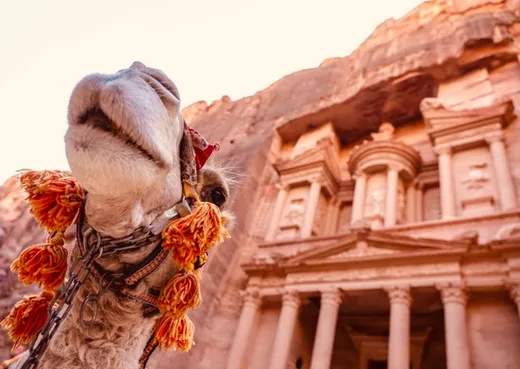
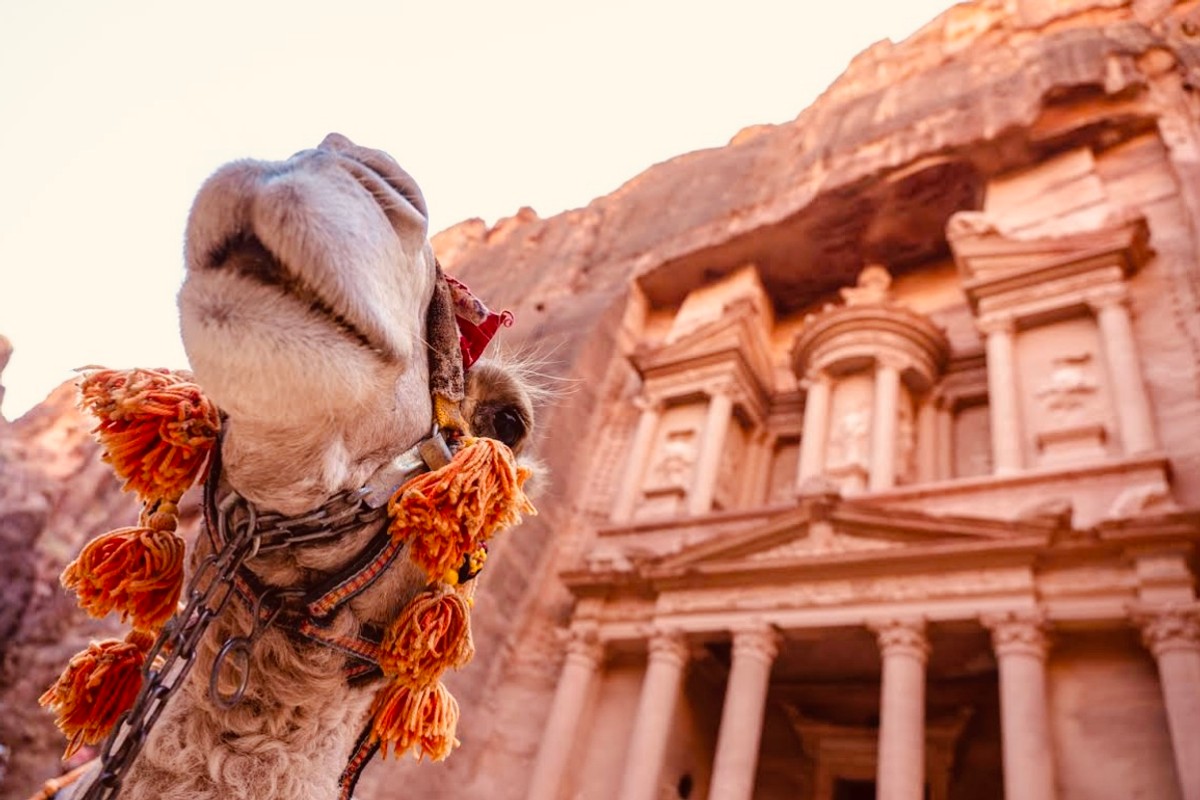
The Treasury (Al-Khazneh in Arabic) was never actually a vault filled with gold. Its romantic name is the result of legends and myths passed down among local Bedouins for centuries.
In reality, it is a monumental royal tomb.
1. What Was the Building Actually Used For?
Most modern archaeologists agree that the Treasury was built around the 1st century BC (most commonly associated with the reign of King Aretas IV) as a mausoleum and tomb for a Nabataean king, or possibly as a sanctuary dedicated to a deity.
When you look inside – entering is now prohibited for tourists in order to protect the monument, but you can see into it – do not expect a labyrinth of corridors.
The interior consists of one enormous, completely austere, smoothly carved square chamber with several smaller niches along the sides. These niches were used to hold the bodies of members of the royal family.
Recent excavations have also revealed additional underground tombs containing skeletons directly beneath the present ground level in front of the Treasury.
2. Where Did the Name “The Treasury” Come From?
The name Al-Khazneh (The Treasury) was coined by nomadic Bedouins in later centuries. They believed in a myth that an Egyptian pharaoh, who was pursuing Moses and the Israelites, had hidden an enormous treasure inside the monumental stone urn at the very top of the façade (right in the centre above the balcony).
The Bedouins believed that the pharaoh had used magic to create this enormous structure in order to hide his gold from the desert storms.
3. Bullet Marks: Evidence of Human Greed
If you look closely at the Treasury, you will see dozens of marks and holes in the stone urn at the top. These are not the result of erosion.
During the 19th and early 20th centuries, Bedouins fired rifles and muskets at the urn. They hoped to break open the sandstone container and have the pharaoh’s gold and precious stones rain down on them.
However, the urn – just like the entire structure – is carved from a single piece of solid rock, so there was nothing inside. The shooting only caused irreversible damage to it.
4. Fascinating Architecture: A Mix of Cultures
The Treasury is also fascinating because it shows just how open to the outside world the Nabataeans were. The façade features not only Arabian elements, but also an elaborate Hellenistic (Greek) style:
There are Corinthian columns.
The façade is carved with figures from Greek and Egyptian mythology, such as the Greek goddess Tyche merged with the Egyptian Isis, Amazons, and the mythical Dioscuri – Castor and Pollux, who were believed to protect travellers.
How to Get to Petra (Wadi Musa)
The gateway to Petra is the town of Wadi Musa, which lies directly next to the archaeological site.
By rental car (most recommended): From Amman Airport, the journey takes approximately 3 hours via the modern Desert Highway. From Aqaba, it takes around 2 hours. Driving in Jordan is safe and Google Maps works reliably.
By JETT bus: Air-conditioned tourist buses depart from Amman (Abdali station) daily at 6:30 AM and return from Petra at 5:00 PM. Book your tickets online in advance.
Tickets and the Jordan Pass: How to Save Thousands
Admission to Petra is among the most expensive, but there is a legal way to save a significant amount of money.
- Individual ticket: 1 day = 50 JOD (~1,650 CZK).
- Jordan Pass (essential tip): If you spend at least 3 days (2 nights) in Jordan, buy the Jordan Pass online in advance (from 70 JOD). The pass fully includes the visa fee (which would otherwise cost 40 JOD) and admission to Petra. This can save you a significant part of your travel budget.
Petra Is More Than Just the Treasury: What Should You Not Miss?
Once you have walked through the Siq and taken your photos at the Treasury (Al-Khazneh), keep going.
The Treasury is only the tip of the iceberg! The entire site covers an area of more than 260 km².
So, what awaits you next?
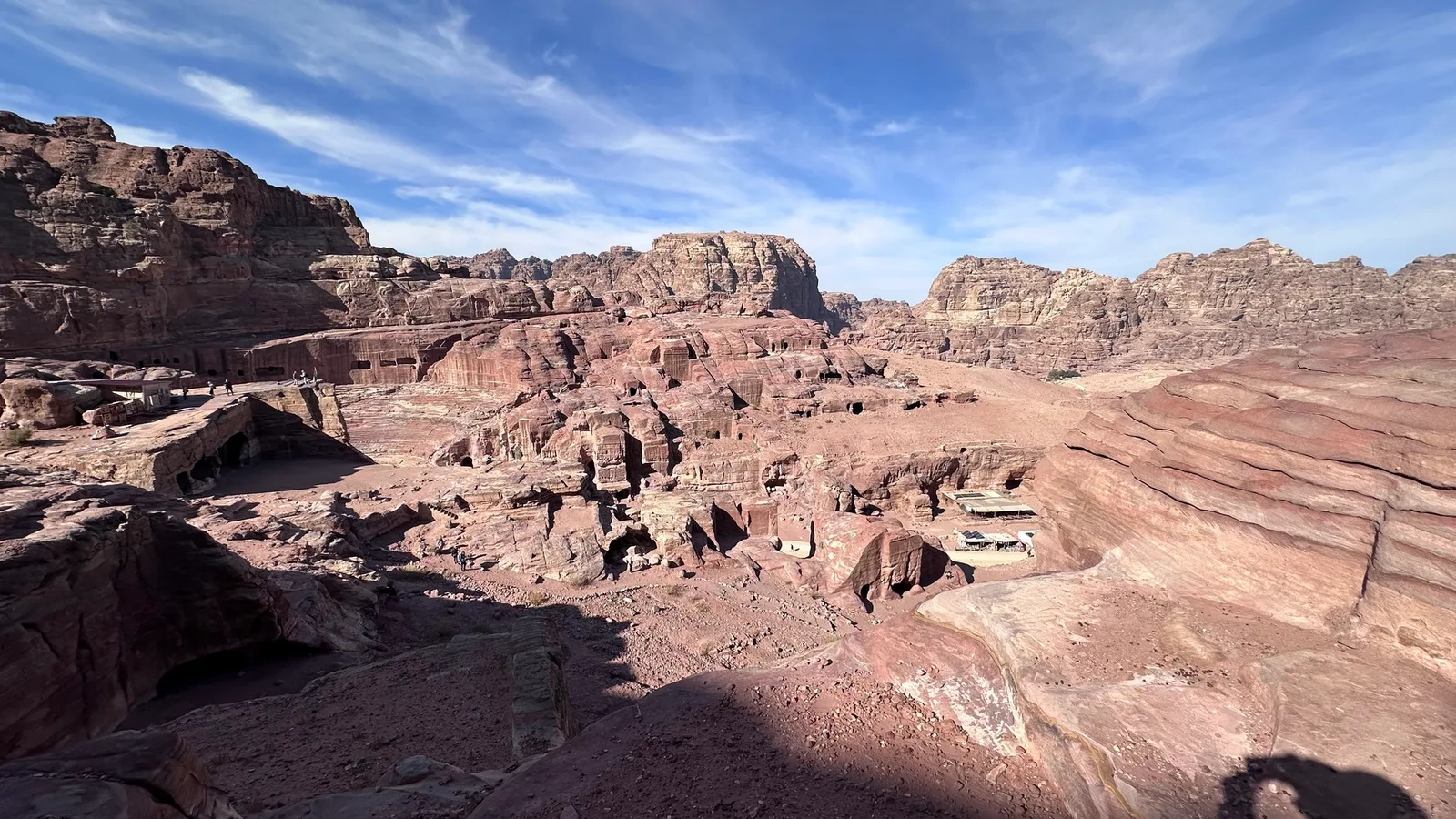
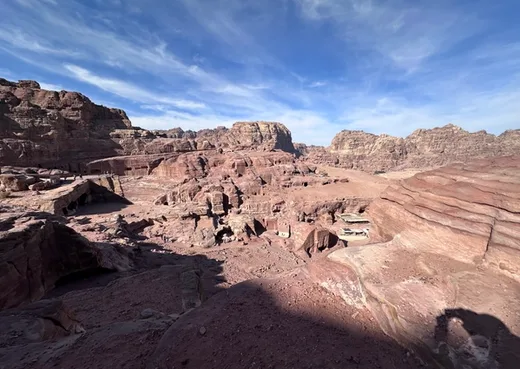
- Street of Facades: Just beyond the Treasury, the canyon opens up and on both sides you will see dozens of Nabataean tombs carved into the rock, one above another. It looks like an ancient sandstone neighbourhood.
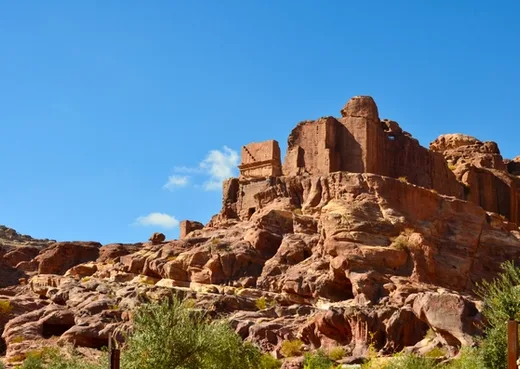
- Royal Tombs: A monumental complex of four enormous façades glowing in every shade of red, pink and yellow. You can go inside – the sandstone patterns on the ceilings look like liquid marble or psychedelic paintings.
Great Temple: A huge complex in the heart of the city, where archaeologists have uncovered columns, staircases and even a small theatre. This is where you begin to understand the power of the civilisation that once lived here.
Reality vs. Instagram: What Bedouin Tricks Should You Watch Out For?
Petra is magical, but it is also a serious tourist business. Be prepared for the following situations:
“Horse Ride Included in the Ticket”: At the entrance, Bedouins will tell you that the horse ride to the Treasury is included in your ticket. Technically, it is, but at the end of the ride they will expect a large tip (10–20 JOD). If you do not want to pay or deal with arguments, do not get on the horse.
Ethical Tourism and Animals: Everywhere you go, you will be offered rides on donkeys or horses up the steps. Unfortunately, the animals often work in harsh conditions and under the scorching sun. We recommend relying on your own two feet.
Carry Cash: You can buy your ticket by card, but inside the site, Bedouin stalls selling tea and food often prefer Jordanian dinars (JOD). However, we were also able to pay by card.
Where to Climb for the Best Views in Petra (And How to Avoid Getting Ripped Off)
Most people only see Petra from below – walking along dusty paths through the canyons and shielding their necks from the scorching sun.
But the real magic is hidden high above on the rocky cliffs.
If you are reasonably fit and have sturdy footwear, these three viewpoints are experiences you simply should not miss.
1. The Iconic View of the Treasury from Above: Al-Khubtha Trail
You know those famous Instagram photos where people sit on a Bedouin carpet, drink tea and look down at the pink façade of the Treasury far below? This is exactly that place.
However, there are two very different ways to reach this viewpoint:
The official and safe route (Al-Khubtha): It starts just beyond the Royal Tombs. A legal and safe, but very demanding climb awaits you, with hundreds of steps carved into the rock. Once you reach the top, you will walk across the rocky plateau for a while until you reach a Bedouin tent right on the edge of the cliff.
The Bedouin “mafia” at the top: The tent on the edge of the cliff belongs to local Bedouins who have turned the viewpoint into a private business. To access the very edge and take a photo, you have to buy an overpriced tea or Coke from them (around 2–3 JOD). Think of it as an entrance fee – the view is worth it. Unfortunately, the viewpoint overlooking the Treasury is not free, and it is not exactly cheap.
WATCH OUT FOR SCAMS AT THE TREASURY: Right below the Treasury, young Bedouin men will constantly approach you. They will claim they can take you to the viewpoint via a “shortcut” in 5 minutes and will ask for 10–20 JOD.
This route is unofficial and extremely dangerous (you have to climb over exposed, slippery rock without any safety equipment), and park rangers impose strict fines for using it.
Always choose the longer, official route from the Royal Tombs!
2. High Place of Sacrifice: A 360° View of the Entire Rock-Cut City
One of the most sacred places of the ancient Nabataeans, where ritual animal sacrifices were performed on the top of the mountain.
How to get there: The trail starts in the main valley, just beyond the Street of Facades (it is well signposted). The climb takes approximately 45 minutes up steep steps.
- Why it’s worth it: While Al-Khubtha only gives you a view of the Treasury, from here you get a complete panoramic view of the entire Petra valley. You will see just how incredibly vast the city really is and how deeply it is hidden within the mountains.
- Insider tip: Don’t go back down the same way! Descend along the back side of the mountain through Wadi Farasa. It is a beautiful, almost deserted trail where you will pass completely abandoned temples and tombs, such as the Garden Triclinium.
Photography Tips
- Light is key: Because of the narrow canyon, the Treasury is best illuminated by sunlight in the morning, roughly between 9:00 AM and 11:00 AM, depending on the time of year. If you reach the Al-Khubtha viewpoint in the afternoon, the Treasury will already be completely in the shade.
- Royal Tombs at sunset: In contrast, the Royal Tombs take on their most beautiful golden and deep pink colours just before closing time, when they are illuminated by the setting sun.
Why Do You Simply Have to Visit Petra at Least Once in Your Life?
In today’s world, full of edited photos on social media, famous places often turn out to be disappointing in reality. Petra is different. It is one of the few places in the world that exceeds all your expectations when you see it in person. It should definitely be on your travel bucket list.
Without a doubt, it is an architectural wonder that seems to defy logic. When you stand in front of the Treasury, your brain struggles to comprehend how people managed to create something like this more than 2,000 years ago.
The Nabataeans did not build these structures from bricks or stones – they carved them directly into massive rock faces from top to bottom. Without modern technology, without scaffolding, using only chisels, hammers and incredible mathematical precision. Seeing this triumph of human determination and ingenuity with your own eyes is a profound experience.
It is no coincidence that this place has fascinated filmmakers and became a setting for movies such as Indiana Jones and the Last Crusade and Transformers.
Petra is known as the “Rose City,” but the reality is far more colourful. The local sandstone contains dozens of minerals, creating incredible natural textures. The entire city literally changes colour as the sun moves across the sky – from cool greyish-pink tones in the morning to fiery orange at sunset.
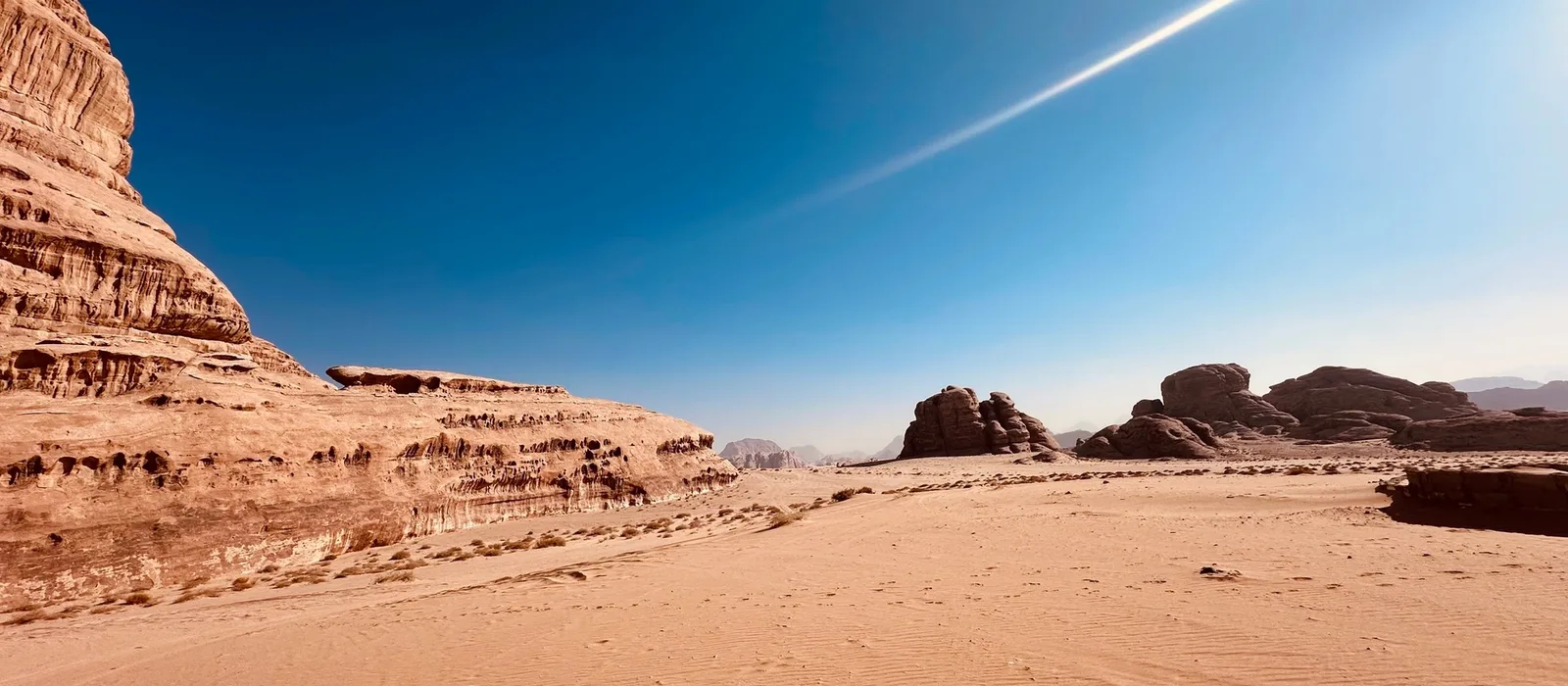
You can hike along mountain trails, scramble up to the tops of the rocks, discover hidden wadis (canyons) and enjoy views across the endless wilderness of the Wadi Araba mountains. It is a perfect combination for those who love history but also want active hiking and adventure.
Where to Eat and Drink in Petra
Finding good food in and around Petra is not difficult, but you need to know where to look. Prices vary significantly in tourist areas, and so does the quality. Inside the historic site, forget about traditional restaurants (with the exception of the overpriced Basin Restaurant at the end of the main route). The real charm lies in Bedouin hospitality.
- Bedouin tea with sage and cardamom: You will find it everywhere in makeshift tents. It is incredibly sweet and strong, and is brewed in kettles directly over charcoal. Bedouins drink it hot even in the most intense heat because it hydrates well and quenches thirst. It usually costs around 1–2 JOD (~35–70 CZK).
- Fresh pomegranate juice or lemon mint juice: Right by the Treasury or along the main route, you will find stalls where fresh juice is squeezed right in front of you. The Lemon Mint combination (lemon, plenty of mint and ice) feels like being reborn after spending the whole day in the sun.
Since we do not visit restaurants directly in places like this, simply pack your own snacks in your backpack as we did (bread, hummus, nuts, fruit), bought in the morning at a supermarket in Wadi Musa. Then, in the middle of the rock-cut city, you can have a picnic with a view that no restaurant can match.

Discussion
Comments
No comments yet. Be the first to share your thoughts.